Choosing the Cheapest Automatic Bollards in 2026 requires more than comparing online prices. A low purchase cost may hide shipping fees, installation work, battery replacement, or weak after-sales support. This guide examines budget-friendly models through practical buyer criteria, including lifting speed, cycle frequency, impact resistance, weather protection, power requirements, and warranty coverage. Every detail matters when a bollard stands outside a warehouse, apartment entrance, hotel driveway, or small retail site.
Look beyond the price tag.
A reliable comparison should also consider real operating conditions. A busy entrance may need a stronger motor than a private driveway. Rain, dust, freezing temperatures, and frequent vehicle movement can quickly expose poor construction. Check product drawings, technical certificates, control-system compatibility, emergency lowering features, and supplier documentation before ordering. Confirm whether replacement parts are available locally. That small step can prevent long downtime.
Some low-cost products appear attractive but provide limited performance data. This is where careful judgment becomes necessary. Not every inexpensive bollard is a poor choice, and not every premium model offers better value for every site. Prices and specifications can change during 2026, so buyers should verify current information directly with manufacturers or authorized distributors. We also recognize one limitation: online descriptions may not reveal installation quality or long-term reliability. Therefore, this overview treats the Cheapest Automatic Bollards as a starting point, not an automatic buying decision. Practical testing, qualified installation, clear maintenance instructions, and transparent supplier communication remain essential for a safer, more dependable investment.
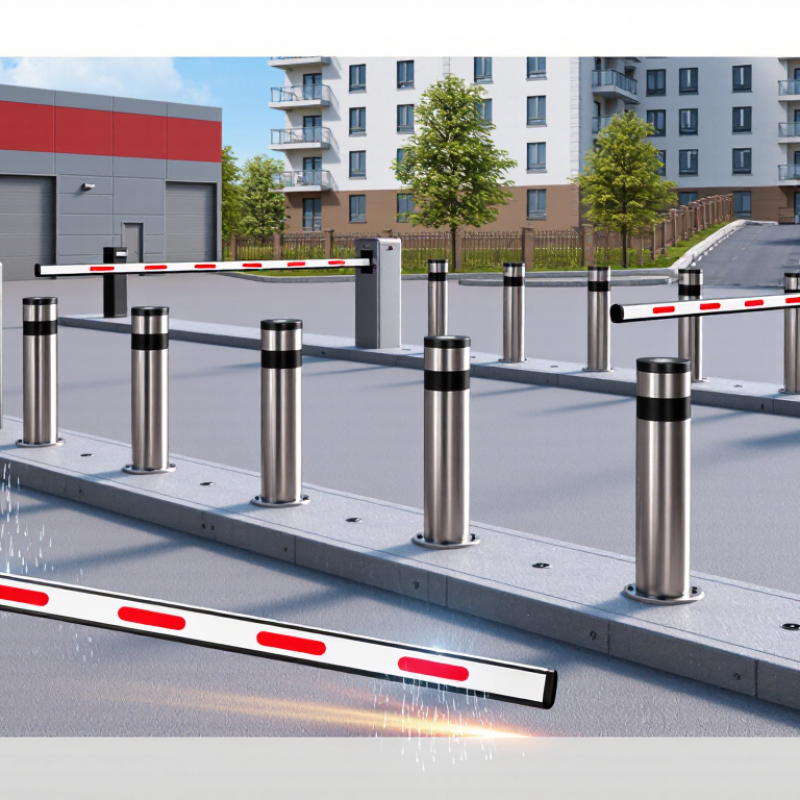
Automatic bollards are retractable posts installed in the ground to control vehicle access. When lowered, they sit near pavement level, allowing authorized vehicles to pass. When raised, they create a visible physical barrier. They are used at building entrances, parking areas, and pedestrian zones.
A motorized actuator lifts and lowers each post. Depending on the design, it may use hydraulic fluid or an electric drive. A control unit receives a signal from a keypad, access card reader, or remote switch. The bollard then moves into position. They rise on demand. Sensors or safety loops can help detect vehicles and reduce the risk of movement at the wrong time. However, protection features differ between models, so buyers should check the specifications rather than assume every system includes them. Ground conditions matter, too. Poor drainage can lead to water or debris collecting inside the foundation, creating maintenance problems.
Tips: Before comparing prices, check installation depth, power requirements, operating speed, cycle rating, and impact rating. Ask how the unit behaves during a power failure. A lower purchase price may not include excavation, wiring, or ongoing servicing. Drainage is easy to underestimate. A site inspection can reveal constraints that a product sheet cannot.
An affordable automatic bollard is one that fits the site without creating avoidable repair or installation costs. A low purchase price can be tempting, but it does not show how the unit will perform during daily use. Check the rated operating cycle, raising speed, impact rating, and expected maintenance needs against the actual traffic pattern. A quiet entrance serving occasional deliveries has different demands from a busy driveway with repeated vehicle movements.
Look closely at practical details. Is the control system easy to access? Can a technician inspect hydraulic or electromechanical parts without removing surrounding paving? Clear installation requirements matter, too; unexpected drainage or foundation work can quickly change the project budget. Check for obstacle detection and manual operation options, and confirm what conditions those features cover. Small details count.
Compare quotations using the same specifications, not price alone. Ask what is included: controls, safety devices, installation, and routine servicing. A cheaper model may be sensible for lighter use, yet less suitable for a demanding entrance. I would also leave room for uncertainty: real maintenance needs depend on weather, usage, and installation quality, and sales estimates cannot capture every site condition.
For a private driveway or small staff entrance, a basic electromechanical bollard can be a cost-conscious choice. It suits moderate daily use and avoids the more complex hydraulic setup. Check the unit’s duty cycle, operating speed, and required foundation before comparing purchase prices. A low upfront cost may not include excavation, wiring, drainage, or access controls.
Busy commercial entrances may need hydraulic bollards, which are designed for frequent operation. They usually cost more to install and maintain, so they may be poor value for occasional use. In locations with limited space, compact models can simplify installation, but confirm that their height and visibility suit the site. Budget estimates can be misleading. Site work often changes the total.
Tips: Match the bollard to real traffic volume, not peak-day guesswork. Ask for a full installed-cost breakdown, including safety sensors and maintenance access. Check local weather exposure, too; water and grit can affect moving parts. Leave room for service vehicles. Small planning gaps can become expensive later.
Automatic bollard prices vary with impact rating, quantity, controls, and ground conditions. Compare installed cost, not just the unit price. Ask whether the quote includes excavation, reinforced foundations, drainage, wiring, commissioning, and traffic management. A low initial price can conceal expensive site work.
Safety needs evidence. ASTM International’s 2023 F2656/F2656M test method classifies full-scale vehicle impacts by speed and penetration; M30 denotes a 30-mph test. That rating applies to the tested configuration, not automatically to every installation. Check that the bollard, foundation, spacing, and site layout match the documented test conditions. A higher rating is not always the right choice; assess the actual threat and access needs.
Tips: Request a written lifecycle estimate covering inspections, parts, labor, and expected service intervals. Ask who handles faults and how quickly access can be restored. Confirm the installer has documented experience with the specified foundation and controls. Small details matter. Drainage is easy to overlook, yet standing water can create avoidable maintenance problems. Compare warranty exclusions carefully, and leave room for uncertainty in repair budgets.
2026 Top Cheapest Automatic Bollards for Buyers
Buyer Checklist for Selecting a Reliable Bollard in 2026
A low purchase price does not always mean a lower long-term cost. Check the full quotation for installation, wiring, drainage, controls, and replacement parts. Ask what the warranty covers and how quickly common components can be supplied. For a busy entrance, also confirm the bollard’s operating cycle and suitable impact rating. The cheapest model may not suit frequent daily use.
Tips: Measure the opening and available foundation depth before comparing models. Check the required power supply and whether manual operation is possible during an outage. Request written specifications, not just sales descriptions. Compare service access, maintenance intervals, and delivery costs alongside the unit price. Small details matter.
Before ordering, review the site conditions with a qualified installer. Poor drainage can leave water around the housing, while an uneven surface may affect movement. Ask how the system responds to obstacles and whether safety sensors are included. I would not treat a low bid as proof of poor quality, either; clear specifications and practical support matter more. Still, some listings leave important costs unclear, so get each assumption in writing.
Compare complete installed cost, not just the bollard price. Relative cost tendencies are indicative only; specifications, site conditions, duty requirements, and installation scope can change the ranking.
| Option or checklist item | Typical cost tendency | What to compare | Buyer verification |
|---|---|---|---|
| Electromechanical automatic bollard | Often a lower-to-middle-cost powered option, depending on duty and specification. | Drive design, operating speed, cycle rating, service access, and replacement-part availability. | Confirm suitability for the required traffic frequency and local operating conditions. |
| Hydraulic automatic bollard | Can have higher equipment and maintenance costs; suitability depends on the system design and duty. | Hydraulic power unit arrangement, number of bollards served, maintenance needs, and emergency operation. | Ask how leaks, servicing, and power loss are handled; check the supplier’s documented duty rating. |
| Pneumatic automatic bollard | Cost varies; a compressor and associated equipment may add to the system cost. | Compressor requirements, air-line routing, noise, service access, and the number of bollards in the system. | Include the compressor, controls, installation, and ongoing servicing in the comparison. |
| Surface-mounted automatic bollard | May reduce excavation work where the product and site allow; it is not automatically the cheapest installed option. | Base dimensions, anchoring method, available clearance, cable routing, and impact-performance documentation. | Confirm that the mounting surface and anchors meet the installation requirements and intended use. |
| Buried automatic bollard | Civil works can add substantially to installed cost, especially where excavation or drainage is difficult. | Foundation details, excavation, utilities, drainage, reinstatement, and traffic-management requirements. | Get a site-specific installation assessment before comparing purchase prices. |
| Impact rating and security | Higher tested performance can affect product and foundation costs. | Tested vehicle-impact performance, configuration tested, foundation requirements, and intended security purpose. | Request the relevant test documentation; do not treat appearance or bollard diameter as proof of impact performance. |
| Cycle rate and traffic volume | A system designed for frequent operation may cost more than a lower-duty option. | Expected operations per hour or day, recovery time, queueing, and simultaneous operation of multiple units. | Match the documented duty rating to actual traffic patterns, not occasional-use assumptions. |
| Power, controls, and backup | Control equipment, access devices, and backup provisions can add to the system total. | Power supply, control-panel location, access-control compatibility, safety devices, and outage behavior. | Specify what happens during a power or communications failure and how authorized users can operate the system. |
| Drainage and environment | Site preparation or protective measures may add cost in wet, corrosive, or harsh environments. | Groundwater, surface-water runoff, local climate, corrosion exposure, and the product’s stated environmental limits. | Check drainage details and environmental specifications for the actual installation site. |
| Warranty, service, and total cost | A low purchase price may not mean the lowest lifetime cost. | Warranty coverage, exclusions, service response, consumables, spare parts, and recommended maintenance. | Compare equipment, installation, maintenance, and expected replacement costs over the same time period. |
| Quote completeness | A comparable quote should identify included and excluded work. | Bollards, control equipment, delivery, excavation, foundations, electrical work, commissioning, and training. | Request an itemized, site-specific quote and compare like-for-like specifications. |
It retracts into the ground to let authorized vehicles pass. When raised, it forms a visible barrier. It is not a magic fix.
A motorized actuator raises or lowers the post. A keypad, access card reader, or remote switch can send the control signal. Some systems also use vehicle sensors.
Compare installation depth, power needs, operating speed, cycle rating, and impact rating. Ask whether excavation, wiring, and servicing are included. The unit price tells only part of the story.
Match its rated cycle to actual traffic. An entrance with occasional deliveries has different needs from a busy driveway. Daily use can change the calculation.
Check for obstacle detection and manual operation options. Ask what conditions they cover. Features differ, so do not assume every model includes them.
It describes results for a tested configuration and specified impact conditions. The foundation, spacing, and site layout must match the documentation. A higher rating is not always necessary.
Poor drainage can let water and debris collect inside the foundation. That may create maintenance problems. Easy to overlook.
Request expected inspections, parts, labor, and service intervals. Confirm who handles faults and how quickly access can be restored. Repair needs remain hard to predict.
This guide explains what automatic bollards are and how they use powered mechanisms to rise and lower, controlling vehicle access while keeping entry points convenient. It explores the features that shape affordability, including materials, lifting speed, impact resistance, safety sensors, and control options. Rather than treating the lowest purchase price as the best value, it compares practical automatic bollard types for settings such as driveways, parking areas, and commercial entrances.
Buyers will also find guidance for weighing equipment costs against installation, safety, and ongoing maintenance. A straightforward checklist helps assess site conditions, traffic frequency, required protection, power supply, service access, and warranty coverage before making a choice. With these considerations in mind, readers can identify Cheapest Automatic Bollards that suit their application and budget while prioritizing dependable operation and long-term value.

KAVASS