7 Outdoor Bicycle Locker Buying Tips for Buyers

Time:2026-11-18 Author:Ethan
0%

An Outdoor Bicycle Locker is more than a metal box. It must protect a bicycle from rain, discourage tampering, and remain easy to use on a busy morning. Demand is real: PeopleForBikes’ 2024 U.S. Bicycling Participation Report estimated that 112 million Americans rode a bicycle in 2023. That figure does not tell buyers how many lockers a site needs. It does show why secure bicycle storage deserves practical attention.

Good purchasing decisions start with the site. The U.S. Census Bureau’s 2023 American Community Survey tracks bicycle commuting, but commuting data cannot capture every rider, trip, or storage need. A campus, apartment entrance, and transit stop each face different constraints. Measure the available footprint. Check door clearance, access paths, drainage, and visibility before comparing finishes or prices. Small details matter.

The tips ahead focus on capacity, materials, locking design, weather resistance, installation, maintenance, and total cost. Look closely at usable interior space, not just the listed capacity. A wide handlebar or front basket can make a “four-bike” unit feel crowded. There is no perfect locker for every site. I cannot responsibly provide a named expert quotation without a verifiable source; inventing one would undermine a buyer’s trust. Instead, use product specifications, site measurements, and documented warranties to assess each option.
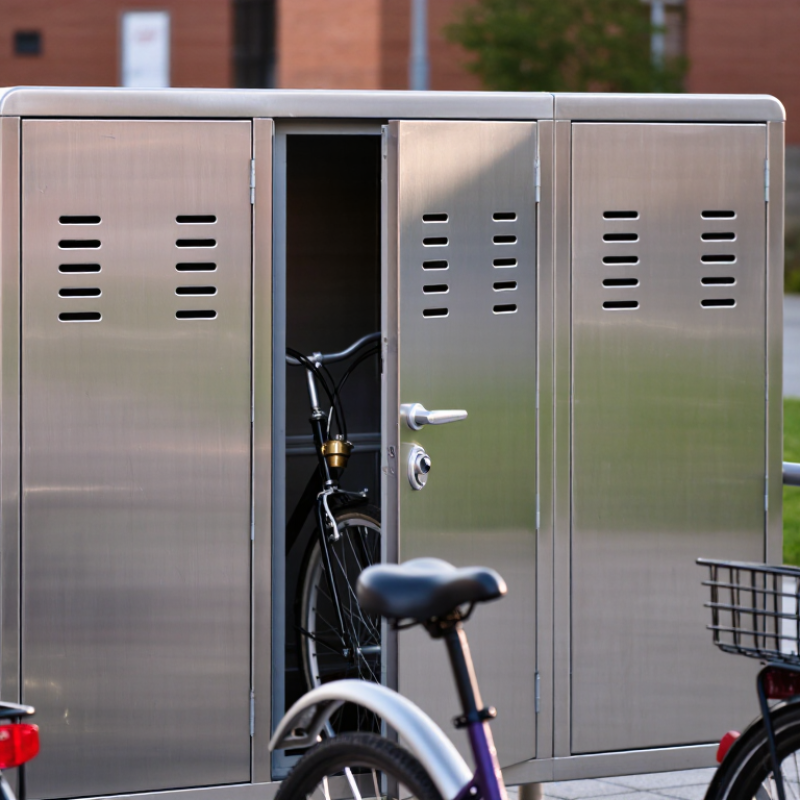
7 Outdoor Bicycle Locker Buying Tips for Buyers

Define Your Storage Needs and Available Outdoor Space

Before choosing an outdoor bicycle locker, count the bikes it must hold and note their sizes. A child’s bike, a wide-handlebar commuter bike, and an electric bike need different clearances. Include helmets, pumps, and wet-weather gear in your plan. PeopleForBikes’ 2023 U.S. Bicycling Participation Report estimated that 112 million Americans rode a bicycle in 2022, a reminder that household storage needs can vary widely. Count your own bikes, not an average household.

Measure the usable site, not just the patch of ground where the locker might sit. The Association of Pedestrian and Bicycle Professionals’ 2015 Essentials of Bike Parking uses a 2-by-6-foot parking space per bicycle and a 5-foot access aisle in its layout guidance. Treat these figures as a planning reference, not a locker specification. Locker walls, door swing, and internal racks can reduce usable space.

Check the route from the street to the locker. A narrow gate, step, or sharp turn can make a well-sized unit frustrating to use. Leave room to open the door and roll a bike in without lifting its rear wheel. My first sketch ignored the downspout; rainwater pooled exactly where the door needed to swing. Measure twice. Note slopes, drainage, and nearby obstacles before comparing locker dimensions.

Choose a Locker Size That Fits Your Bikes and Gear

Measure the largest bicycle first, not the smallest. Record its length, handlebar width, and height, including mirrors or a child seat. NACTO’s Urban Bikeway Design Guide and the Association of Pedestrian and Bicycle Professionals’ Essentials of Bike Parking use roughly 2 by 6 feet as a planning footprint for a standard bicycle. Treat that as a starting point, not a locker’s required interior size. Walls, doors, and stands take up room. Measure the usable space inside.

Count every bike and the gear you expect to store. A helmet, pump, lock, and wet panniers can quickly crowd a tight locker. For two bikes, check whether handlebars can sit side by side without blocking the door or access to the rear bike. E-bikes and cargo bikes may need more room than a standard-bike footprint allows. Measure your actual setup. It sounds obvious, but buyers often compare exterior dimensions and miss the narrower interior. Leave clearance to roll each bike in and out without scraping pedals or catching bags. A little spare space helps; too much can make the locker unnecessarily bulky.

Compare Materials, Weather Resistance, and Ventilation

Compare the shell, joints, and floor, not just the material label. Galvanized steel can resist corrosion, but damaged coatings and exposed cut edges may rust. Aluminum is lighter, while UV-stabilized plastic avoids rust but may flex or age in strong sunlight.

NACE International’s 2016 IMPACT study estimated global corrosion costs at US$2.5 trillion, or 3.4% of global GDP. That figure covers many industries, not bicycle lockers; it still shows why drainage and coating quality matter.

Check seams and fasteners closely.

Weather protection should keep rain out without trapping damp air. Look for a sloped roof, raised floor, and drain paths that do not send water toward stored bikes. Add screened vents high and low, positioned away from wind-driven rain. Small details matter.

The US Environmental Protection Agency recommends keeping indoor humidity below 60%, ideally between 30% and 50%, to limit moisture problems. A locker is not a room, so treat this as useful guidance, not a locker specification.

After rain, inspect for condensation around cold metal walls and dampness beneath tires. I would not assume “weatherproof” means dry inside; a covered test unit can reveal problems that a brochure cannot.

Evaluate Security Features, Access, and Installation Requirements

An outdoor bicycle locker needs to protect more than the frame. Check how the door, hinges, and locking points are built. A strong panel can still be vulnerable if its hinges are exposed or its latch flexes under pressure. Look for weather-resistant materials and drainage that keeps rain from pooling inside. Security is a system, not a single lock.

Access matters every day. Try opening the door while holding a helmet or bag, and check whether handlebars can turn without catching. If several people will use the locker, agree on a practical key or access-code arrangement before buying. Small details matter. I would not assume a heavy enclosure is automatically secure; weight can disguise weak fittings, and that is easy to overlook.

Installation can change the total cost and usefulness. Measure the site, including the approach path, door swing, and nearby walls. Check whether the base must be level, anchored, or set on a prepared surface, and confirm who handles that work. A sloped corner may seem suitable until the door sticks. Measure twice. Leave enough room to open the locker fully and remove a bicycle without scraping the wall.

Review Maintenance Needs, Warranty, and Total Cost

Outdoor bicycle lockers face more than rain. Wind-driven grit can settle around hinges, while standing water may shorten the life of metal panels. Check whether the floor drains and whether vents keep direct rain away from stored bikes. Ask what routine care is recommended, including lubricant type and cleaning frequency. Small chores matter. A locker that needs frequent hinge adjustment may become frustrating beside a busy home or workplace.

Tip: Before buying, inspect hinge access, door alignment, and anchor points. Ask about replacement-part availability and expected service intervals. Take a photo of the installation area after rain; it may reveal puddles missed during a quick visit. This check is easy to skip.

Read warranty terms closely. Look for coverage periods on the frame, locks, and moving parts, plus exclusions for corrosion, poor anchoring, or neglected maintenance. Keep purchase and installation records. Warranty language can sound reassuring, but one short exclusion may change what is covered. Compare total cost, not just purchase price: include delivery, base preparation, anchoring, upkeep, and likely replacement parts. A cheaper unit may still suit your needs, but reconsider if repairs require special parts or a technician. Estimates are imperfect; leave room for surprises.

FAQS

How do I decide what size bicycle locker I need?

Count every bicycle and note its size. A child’s bike, wide handlebars, and an electric bike need different clearances. Include helmets, pumps, and wet-weather gear.

What site measurements should I take?

Measure the usable area, approach path, nearby walls, and door swing. Check slopes, drainage, gates, steps, and sharp turns. Measure twice.

How much space should I allow per bicycle?

A planning guide suggests a 2-by-6-foot parking space per bicycle and a 5-foot access aisle. Treat these as layout references, not locker specifications. Interior racks and walls can reduce usable space.

How can I check whether daily access will be convenient?

Test the door while holding a helmet or bag. Make sure handlebars can turn without catching, and leave room to roll bikes in without lifting them. Small details matter.

Which security features should I inspect?

Check the door, hinges, latch, and locking points together. A sturdy panel may still have weak exposed hinges or a latch that flexes. Weight alone proves little.

How can I protect bicycles from rain?

Look for weather-resistant materials and drainage that prevents water from pooling inside. Also check the ground near the entrance. My first plan missed a downspout.

What should I confirm before installation?

Check whether the base needs leveling, anchoring, or a prepared surface. Confirm who will do that work and whether the approach path stays clear.

What can make a well-sized locker frustrating to use?

A narrow gate, step, sharp turn, or nearby wall can block access. Leave enough room to open the door fully and remove a bicycle without scraping it. I might still miss something.

Conclusion

Choosing an Outdoor Bicycle Locker starts with understanding how many bicycles and accessories you need to store, where the locker will go, and how much room is available for access. Measure the space carefully, then select a size that accommodates your bikes and gear without making everyday use awkward. Consider the locker’s construction, resistance to rain and sun, and ventilation, since these factors can affect durability and help reduce trapped moisture.

Before buying, compare locking options, ease of access, and installation requirements to make sure the unit suits your location and routine. Also consider how much upkeep its materials may need, what the warranty covers, and the full cost beyond the purchase price. Weighing these details together can help you choose a practical storage solution that fits your space, protects your equipment, and remains convenient over time.


Ethan

Ethan

Ethan is a seasoned marketing professional with a deep expertise in our company's innovative product line. With a passion for sharing knowledge and insights, he takes the lead in regularly updating our corporate blog, where he explores industry trends, product features, and effective marketing......