7 Tips for Buying Automatic Parking Bollards

Time:2026-09-18 Author:Aria
0%

Buying Automatic Parking Bollards is not simply a choice between stainless steel finishes and remote controls. The right system must fit the entrance, traffic pattern, ground conditions, and people using the site daily. A residential driveway may need quiet operation, while a hotel entrance may require faster cycles and emergency access. Small details matter, including drainage, visibility, control range, and replacement-part availability.

Security expert Bruce Schneier offers a useful reminder: “Security is a process, not a product.” Although his work covers the wider security field, this principle applies directly to bollard selection. Automatic Parking Bollards cannot solve every access problem alone. They should work with lighting, cameras, signage, pedestrian routes, and clear operating procedures. A strong product can still perform poorly when installed on weak foundations or maintained irregularly.

These seven tips will examine the decisions buyers often overlook. They cover impact resistance, lifting speed, power supply, safety sensors, weather protection, installation requirements, and after-sales support. The cheapest quotation may look attractive at first. It may become expensive after repeated faults, water damage, or difficult servicing. That assumption deserves careful questioning.

There is no universal best bollard. A busy commercial entrance, private driveway, and public parking area demand different solutions. Measure the site before comparing models. Ask suppliers for test data, warranty terms, maintenance schedules, and realistic installation drawings. A careful purchase may not feel dramatic. It simply works when the gate is busy, the rain is heavy, and someone needs reliable access.
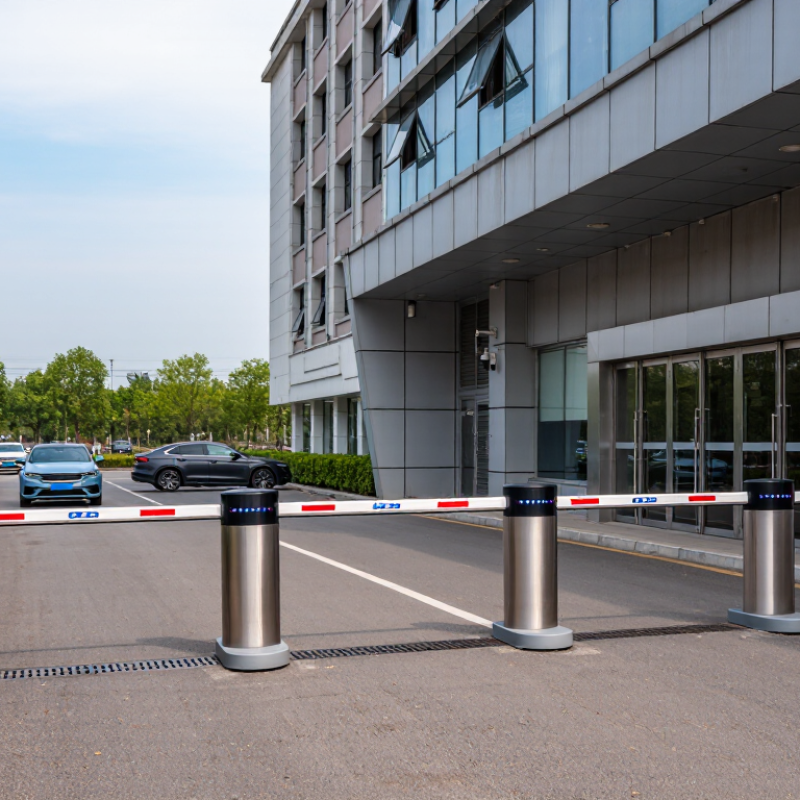
7 Tips for Buying Automatic Parking Bollards

Define Your Security and Access Control Requirements

Buying automatic parking bollards should begin with a clear security and access control plan. Decide what you need to protect, control, and monitor. A residential driveway may require simple vehicle recognition. A hospital entrance may need emergency access, traffic separation, and continuous operation. These situations need different bollard speeds, impact ratings, and control systems.

Walk through the site at different times. Note pedestrian routes, delivery vehicles, turning space, lighting, and drainage. Small details matter. Ask who can enter, when access is allowed, and what happens during a power failure. Access may use remote controls, keypads, cards, mobile credentials, or license plate recognition. Choose a method that matches staff habits and visitor volume. Complex systems can look impressive but create daily frustration.

Security ratings should reflect real risks, not marketing language. Check installation depth, foundation requirements, cycle capacity, and resistance to forced impact. Confirm whether the bollard can connect with gates, cameras, alarms, or emergency controls. A qualified installer should review underground utilities before excavation. This step is often missed. It can delay the project and increase costs. Also request maintenance intervals, replacement procedures, and documented testing records. A system that works perfectly during installation may perform poorly without regular inspection. Leave room for mistakes in your planning. Unexpected delivery vehicles, poor drainage, or weak network coverage can expose gaps before anyone notices.

Compare Bollard Types, Materials, and Operating Mechanisms

Choosing automatic parking bollards starts with the site, not the appearance. In my field assessments, retractable models suit driveways requiring scheduled access. Fixed bollards offer stronger permanent separation but lack daily flexibility. Removable versions work for occasional control, though storage becomes an overlooked task. Rising-arm barriers may cover wider entrances, but bollards provide more focused protection.

Material selection affects service life and maintenance. Stainless steel resists staining near coastal air and creates a clean appearance. Galvanized steel usually offers practical strength and corrosion protection at a lower cost. Powder-coated surfaces add color, but damaged coatings need prompt attention.

Small details matter. Check wall thickness, drainage openings, impact resistance, and replacement-part availability. A polished finish cannot compensate for weak construction.

The operating mechanism deserves careful comparison. Hydraulic systems can deliver smooth movement under frequent use, while electromechanical systems often simplify installation and routine servicing. Pneumatic designs may perform well in specialized environments, but they require suitable air equipment. Watch the cycle speed and recovery time. Noise matters too. I once focused too heavily on lifting force and underestimated drainage problems after heavy rain. That decision required extra maintenance. Review the control method, emergency lowering process, sensors, and power backup with a qualified installer. Confirm that the selected design matches local access, safety, and installation requirements.

Check Installation Conditions and Site Compatibility

Before buying automatic parking bollards, inspect the site as carefully as the product. Measure road width, turning radius, slope, and vehicle clearance. A bollard may fit on paper, yet fail beside a drainage channel or uneven paving. Mark the foundation position with paint. Check whether underground pipes, cables, or heating systems cross that area. Ask a qualified installer to confirm structural depth and concrete strength. This is not a minor detail.

Power availability also decides compatibility. Confirm voltage, cable routes, control-panel space, and protection from standing water. Outdoor equipment needs suitable weather and impact protection for local conditions. Coastal air, freezing temperatures, dust, and flooding can change the specification. Test the signal range before closing walls or paving. A weak connection becomes an expensive surprise. I once underestimated delivery access, and the installation crew moved materials by hand. The schedule slipped. That mistake was avoidable.

Study how drivers and pedestrians will use the entrance. Leave enough stopping distance, visibility, and escape space around each bollard. Check emergency access procedures and local accessibility requirements with the responsible authority. Sensors should detect vehicles reliably, but clear markings remain necessary. Review maintenance access, drainage, replacement parts, and manual release arrangements before purchase. Request drawings, load data, testing records, and written installation limits from the supplier. Recheck every measurement on site. Plans can be wrong.

Evaluate Safety Features, Durability, and Maintenance Needs

7 Tips for Buying Automatic Parking Bollards

Safety should guide the purchase, not appearance. The WHO Global Status Report on Road Safety 2023 estimates 1.19 million annual road deaths worldwide. Clear visibility, controlled movement, and reliable detection therefore matter near pedestrians. Choose bollards with obstruction sensors, warning lights, audible alerts, and emergency manual release. Confirm tested impact performance under ASTM F2656/F2656M-23 or ISO 22343-1. These standards examine vehicle mass, speed, and penetration distance. A high rating is useful, but it does not replace a site-specific risk assessment.

Durability depends on more than steel thickness. Check corrosion protection, drainage design, motor duty cycle, and resistance to dust and water. Ask for documented cycle-test results, not vague claims such as “heavy duty.” Maintenance access should allow technicians to inspect hinges, seals, wiring, and hydraulic or electric components without removing paving. Keep spare keys and release tools in controlled locations. The U.S. Department of Transportation’s MUTCD stresses consistent, visible traffic-control devices, which supports using reflective markings around raised units. Small details prevent expensive damage.

Plan for failure. Power cuts, blocked sensors, and flooded chambers happen. They are not theoretical. A battery backup, status indicator, and logged fault alerts can reduce unsafe downtime. I would also test the system during rain, darkness, and peak traffic. No checklist is perfect. Reviewers often underestimate cleaning, especially where grit reaches moving parts. Ask for a maintenance schedule with inspection intervals, replacement costs, and technician response times before signing a purchase order.

Review Costs, Controls, Warranty, and Supplier Support

7 Tips for Buying Automatic Parking Bollards

Review Costs, Controls, Warranty, and Supplier Support

Tip one: compare the complete installed cost, not just the bollard price. Include foundations, wiring, drainage, access software, commissioning, and future servicing. INRIX’s 2017 Global Traffic Scorecard found that drivers in the United States spent 17 hours annually searching for parking. Reliable access control can reduce wasted circulation, but only when installation suits the site.

Tip two: match the bollard’s duty cycle to real traffic. Tip three: check control options, including keypads, cards, remote commands, and emergency release. MarketsandMarkets forecasts the smart parking market to grow from about 6.1 billion dollars in 2023 to 16.5 billion by 2028. That growth supports connected controls, but connectivity also creates maintenance responsibilities. Tip four: request documented safety testing and integration details. A polished demonstration is not enough.

Tip five: read the warranty line by line. Confirm coverage for motors, control boards, corrosion, labor, and water damage. Tip six: measure supplier support before signing. Ask for response times, spare-part availability, technician coverage, and software update policies. Tip seven: contact two recent customers about failures and repair delays. The easy mistake is choosing the lowest quote. A cheaper unit can become expensive after repeated callouts. I would also require a written maintenance schedule, although many buyers overlook this practical detail. Check every assumption.

7 Tips for Buying Automatic Parking Bollards - Review Costs, Controls, Warranty, and Supplier Support

Tip What to Review Relevant Specification or Data Typical Cost / Value Consideration Questions to Ask the Supplier
1. Match the Bollard to the Security Risk Choose between standard parking control and vehicle-impact protection. Review impact rating, bollard diameter, raised height, steel thickness, foundation depth, and certification where applicable. Decorative or light-duty units should not be treated as crash-rated barriers. Higher security ratings generally require stronger foundations, heavier construction, and more installation work. Compare the complete installed solution rather than the bollard price alone. Is the unit intended only for access control, or has it been independently tested for vehicle impact? What foundation and reinforcement details are required?
2. Compare the Total Installed Cost Include equipment, excavation, drainage, electrical work, controls, traffic management, and commissioning. A complete quotation should identify the bollard, hydraulic or electromechanical drive, control cabinet, loop detectors, access readers, remote controls, civil works, and taxes or delivery charges. As a broad planning guide, an automatic bollard may cost approximately US$1,000–US$4,000 for equipment, while installation and civil works can add approximately US$1,000–US$5,000 or more per unit, depending on site conditions and security requirements. Which items are included or excluded? Are trenching, concrete, drainage, wiring, permits, testing, and after-sales visits included in the quotation?
3. Check Operating Speed and Duty Cycle Select performance according to traffic volume and the required access delay. Many automatic models operate in roughly 3–8 seconds, but actual time depends on the model, height, drive system, weather, and safety settings. Duty cycle may be expressed as cycles per hour or a percentage of continuous operation. High-traffic sites may need higher-duty equipment, ventilation, cooling, faster recovery, and more robust controls. A lower purchase price can lead to higher maintenance costs if the duty cycle is undersized. What is the tested raising and lowering time? How many cycles per hour and per day are permitted? Does the warranty cover operation at the stated duty cycle?
4. Evaluate Control and Access Options Make sure the control system fits daily users, security policies, and emergency procedures. Common options include key switches, radio remotes, keypad or card readers, vehicle loops, intercoms, timers, traffic lights, and integration with access-control systems. Look for manual release and emergency lowering features. Basic remote control is usually less expensive. Networked readers, license-plate recognition, software integration, and multiple entry points increase equipment, configuration, and support costs. Can the controller interface with existing access systems? Is communication wired or wireless? What happens during power failure, network loss, fire alarm activation, or emergency access?
5. Confirm Safety and Environmental Protection Check user protection, drainage, visibility, and resistance to local weather. Look for obstruction detection, anti-crush logic, warning lights, audible alarms where required, reflective markings, corrosion protection, and an enclosure rating suitable for outdoor exposure. Water drainage is especially important for below-ground housings. Coastal, snowy, dusty, or flood-prone locations may require stainless or enhanced-coated components, heaters, drainage pumps, covers, or additional maintenance allowances. What environmental temperature and water-ingress ratings apply? How is an obstacle detected? Is the system compliant with the electrical and machinery safety requirements in the installation country?
6. Read the Warranty and Maintenance Terms Compare warranty duration, exclusions, service intervals, and replacement-part availability. Commercial warranties commonly range from 12 to 24 months, but coverage may differ for the motor, controller, finish, electronics, batteries, installation workmanship, and consumable parts. Budget for periodic inspection, cleaning, lubrication where specified, drainage checks, safety testing, and replacement of wear components. Warranty claims may be rejected if installation or maintenance requirements are not followed. When does the warranty start? Who pays freight and labor? What maintenance records are required? How long will critical spare parts remain available?
7. Verify Supplier Support Before Ordering Assess design assistance, installation guidance, training, response time, and local service capability. A reliable supplier should provide technical drawings, wiring diagrams, foundation details, operating manuals, spare-parts lists, troubleshooting instructions, and commissioning support. Local technicians and stocked spare parts can reduce downtime. The lowest initial quotation may be poor value if repairs require long shipping times or specialist travel. What is the normal response time for faults? Is telephone or remote technical support available? Are replacement parts stocked regionally? Can you provide references for similar installations?

Cost figures are indicative planning ranges in U.S. dollars; actual prices vary by country, site conditions, security rating, quantity, electrical requirements, and installation complexity. Always confirm current pricing, applicable standards, and project-specific compliance requirements with qualified suppliers and installers.

FAQS

How should I define automatic parking bollard requirements?

Identify what needs protection, control, and monitoring. A home driveway may need simple vehicle recognition. A hospital entrance needs emergency access and continuous operation. Consider speed, impact resistance, traffic flow, and control methods.

What site measurements should I check before purchase?

Measure road width, turning radius, slope, vehicle clearance, and stopping distance. Mark the foundation position with paint. Check nearby drainage channels and uneven paving. Paper measurements can still fail.

How can I avoid underground installation problems?

Ask a qualified installer to locate pipes, cables, and heating systems. Confirm foundation depth and concrete strength. This step is often missed. Excavation may otherwise cause delays and added costs.

Which access control method is suitable?

Choose remote controls, keypads, cards, mobile credentials, or vehicle recognition. Match the system to staff habits and visitor volume. A complicated system may create daily frustration. Simpler can be better.

What power and weather conditions affect compatibility?

Confirm voltage, cable routes, control-panel space, and water protection. Consider freezing temperatures, coastal air, dust, and flooding. Test signal range before closing walls or paving. Weak connections become expensive surprises.

How should pedestrian and emergency access be planned?

Provide clear walking routes, visibility, escape space, and accessible passage. Separate vehicles from pedestrians where possible. Review emergency release procedures with the responsible authority. Clear markings still matter.

What security and performance information should I request?

Request impact ratings, cycle capacity, installation limits, load data, and testing records. Confirm connections with gates, cameras, alarms, or emergency controls. Marketing language is not enough.

How can I reduce maintenance and installation risks?

Ask about inspection intervals, replacement procedures, drainage, spare parts, and manual release. Keep maintenance access clear. I once underestimated delivery access, and workers carried materials by hand. The schedule slipped.

Conclusion

Choosing the right Automatic Parking Bollards begins with clearly defining your security goals, traffic flow, and access control requirements. Consider whether the system is intended for private parking, commercial facilities, or restricted areas, and determine how vehicles, pedestrians, and emergency access will be managed. Compare fixed, retractable, and fully automatic designs, along with materials, impact resistance, operating mechanisms, and visual options. The selected bollards should match the site’s security level and daily usage.

Before purchasing, review installation conditions such as ground structure, drainage, power supply, weather exposure, and available space. Safety features, reliable sensors, emergency release functions, durability, and maintenance requirements are equally important for long-term performance. Finally, evaluate the total cost, including installation, controls, servicing, and replacement parts. A clear warranty, responsive technical support, and dependable supplier communication can help ensure that the system remains safe, practical, and effective throughout its service life.


Aria

Aria

Aria is a dedicated marketing professional with a deep passion for innovative strategies and a keen understanding of our company's product offerings. With a wealth of experience in the industry, Aria excels at crafting engaging content that highlights the unique features and benefits of our......