Selecting Automated Bollards for global projects requires more than comparing lifting speed, steel grades, and purchase prices. Each site has different risks, traffic patterns, weather conditions, and maintenance capabilities. A coastal airport may face salt corrosion, while a logistics hub may demand thousands of daily operating cycles. These details shape the correct specification.
Pedestrian safety must remain central. As pedestrian-safety researcher John J. Fruin emphasized, “The design of pedestrian facilities must account for the characteristics of the users.” This principle also applies to vehicle barriers. Designers should examine visibility, warning lights, emergency lowering, access control, drainage, and safe distances. A technically strong bollard can still create confusion at a busy entrance.
Global procurement adds another layer. Check local engineering requirements, electrical compatibility, foundation conditions, and available service support before approving a model. Compare crash ratings carefully, because test classifications do not represent every vehicle, road, or installation method. Review drawings, inspection records, and replacement-part availability.
Small details matter.
A successful Automated Bollards project should balance security, appearance, reliability, and everyday usability. Stainless steel may look appropriate, but it can still suffer in polluted or marine environments without suitable protection. Hydraulic systems may perform smoothly, yet they need planned maintenance and trained technicians. These choices are sometimes underestimated.
The following guide explains how to evaluate Automated Bollards for airports, government facilities, commercial sites, residential developments, and industrial entrances. It also considers control systems, climate exposure, installation constraints, lifecycle costs, and future expansion. No selection is perfect. Good planning simply makes weaknesses visible before they become expensive problems.
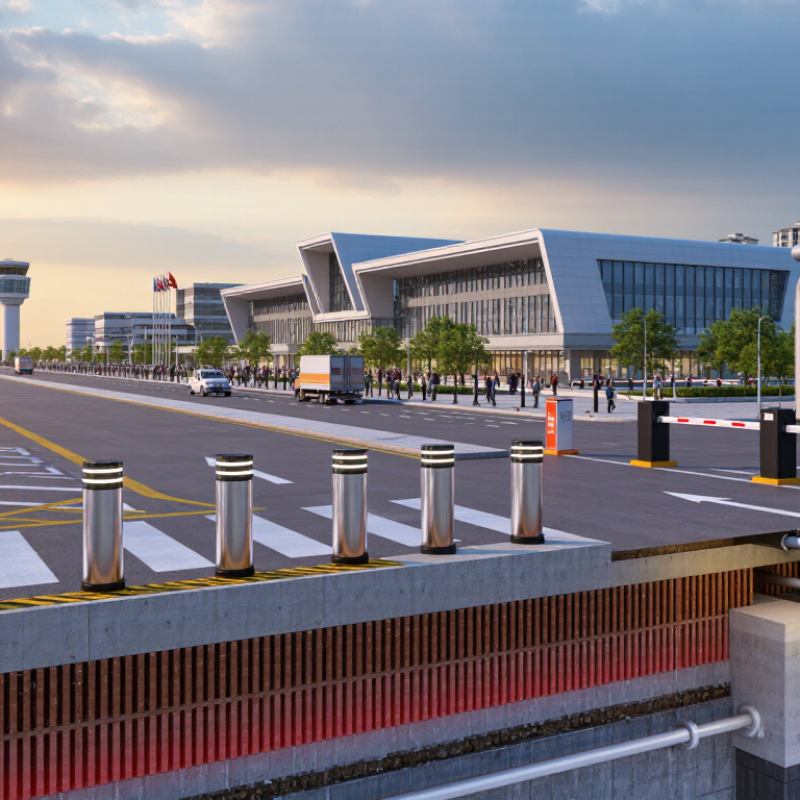
Automated bollard selection should begin with the site’s actual security needs, not a catalogue image. Identify the protected asset, acceptable vehicle types, operating hours, and emergency access rules. The 2024 Global Terrorism Index recorded 8,352 terrorism-related deaths in 2023, but not every site requires high-impact protection. A school entrance, embassy perimeter, logistics gate, and public plaza face different risks.
Define the credible vehicle threat. Consider vehicle mass, approach speed, turning space, stopping distance, and likely impact direction. Independent testing under ASTM F2656 or PAS 68 can indicate impact performance, but ratings are not universal guarantees. They describe specific test conditions. That distinction matters. A perfect specification is rare.
Site conditions can quietly decide system reliability. Check soil bearing capacity, groundwater, drainage, frost depth, existing utilities, and available electrical capacity. A bollard foundation placed beside a saturated trench may require redesign. WHO’s Global Status Report on Road Safety 2023 estimates 1.19 million annual road deaths worldwide, reinforcing the need to separate vehicles and pedestrians where movements overlap. Include traffic flow, visibility, maintenance access, and manual override procedures. CISA guidance also supports layered protection, rather than relying on one barrier. Test the system during power loss and heavy rain. Small gaps remain. Those gaps deserve attention.
How to Choose Automated Bollards for Global Projects?
Start with the threat. Automated bollards differ mainly by movement, resistance, and operating mechanism. Rising retractable bollards provide strong perimeter control and suit entrances requiring frequent vehicle access. Telescopic models descend into smaller foundations, which helps where underground space is limited. Folding bollards need less excavation, but their exposed hinges may require more cleaning in dusty environments. Fixed bollards offer constant protection, while removable units provide flexibility without automation. The correct choice depends on impact requirements, traffic frequency, drainage, and local ground conditions.
Hydraulic systems usually deliver smooth movement and high duty cycles. They can perform well at busy logistics gates, but oil leakage and cold-weather maintenance require careful planning. Electromechanical systems use motors, gearboxes, and sensors. They generally simplify servicing and suit moderate traffic, although extreme loads may shorten component life. Pneumatic systems can operate quickly, yet they need reliable air equipment and moisture control. Not always practical.
Grand View Research valued the global smart cities market at approximately USD 748.7 billion in 2023, with strong growth projected through 2030. This trend increases demand for connected access infrastructure. MarketsandMarkets estimated the physical security market at about USD 127 billion in 2024. These figures support investment, but they do not replace site testing. Engineers should verify cycle ratings, ingress protection, emergency lowering, visibility, and impact performance against standards such as ASTM F2656. A small drainage mistake can disable an expensive system. That deserves more attention.
Choosing automated bollards for global projects starts with risk, not appearance. A hospital entrance needs different protection from a logistics yard. The WHO Global Status Report on Road Safety 2023 reports about 1.19 million annual road deaths. That figure reinforces disciplined vehicle-separation planning, even where traffic moves slowly. Define vehicle types, approach speeds, stopping distances, and emergency access before selecting equipment. Small gaps matter.
Safety evidence should match the threat model and local approval route. Specify impact-tested systems under recognized methods, such as ASTM F2656 or ISO 22343-1. Do not treat a certificate as universal acceptance. Test levels, foundations, soil conditions, controls, and maintenance obligations can differ by country. Automated units also need obstacle detection, visible status signals, manual release, and a documented safe state during power loss. A neat specification can still fail. Independent commissioning and recurring functional tests are worth budgeting.
Accessibility must remain usable when the barrier is operating, faulted, or under emergency control. The World Health Organization estimates that 1.3 billion people, or 16% of the population, experience significant disability (WHO, 2023). Provide clear pedestrian routes, accessible controls, audible and visual indicators, and tactile warnings where required by local codes. Keep bollards away from turning paths and pinch points. Review wheelchair, cane, stroller, and delivery movements on site. I would not assume one global layout works everywhere. Local audits often expose that weakness.
Material selection should follow the site’s corrosion category, not appearance alone. ISO 12944-2 classifies atmospheric exposure from C1 to CX, including severe coastal and offshore conditions. Stainless steel can suit salt-prone areas, while galvanized steel may offer practical value in moderate environments. However, coating damage around hinges and fixings often becomes the first failure point. Specify compatible fasteners, sealed electrical enclosures, and replaceable surface treatments. Small details matter.
Installation quality is equally important. A bollard needs a level foundation, verified drainage, and protected cable routes. Water trapped around the sleeve can freeze, corrode components, or damage hydraulic systems. The World Meteorological Organization reported that 2023 was the warmest year recorded, at about 1.45°C above the pre-industrial average. IPCC assessments also identify increasing heavy-precipitation risks in many regions. Therefore, drainage and thermal protection should be designed for local extremes, not average weather.
Do not treat impact certification as a complete project specification. ASTM F2656 and IWA 14-1 test vehicle impact performance, but they do not replace foundation engineering or operational testing. Review tested speed, vehicle mass, penetration, recovery time, and duty cycle. Commission the system during rain, heat, and power interruption where possible. That may expose weaknesses early. I would also allow more maintenance access than the initial drawing suggests; real sites accumulate grit, standing water, and rushed repairs. Industry data helps, but local experience still decides reliability.
Automated bollards for global projects should be assessed through lifecycle cost, not purchase price alone. The U.S. Department of Energy’s Federal Energy Management Program reports that operations and maintenance can represent 60–80% of facility lifecycle costs. Bollards face similar pressures through motors, sensors, batteries, and control cabinets. Request a five-year cost model covering installation, inspections, spare parts, energy use, and emergency callouts.
Controls deserve equal attention. Specify open communication interfaces, manual override procedures, event logging, and safe failure modes. NIST Special Publication 800-82 recommends separating operational technology from business networks and controlling remote access. Verizon’s 2024 Data Breach Investigations Report found that the human element appeared in 68% of breaches. Operators need role-based access, strong authentication, and practical training. Technology alone is not enough.
SUPPLIER SUPPORT often determines real availability. Require documented response times, regional spare-part stock, firmware procedures, and technician qualifications. Ask for references from similar climates and traffic volumes. ASTM F2656 and IWA 14-1 can help verify vehicle-impact performance, but local regulations still require review. A low-cost unit may satisfy the specification and still create costly downtime. That assumption is risky. I would also test recovery after power loss, network failure, flooding, and winter contamination before approval. Some projects neglect this. Perhaps the most expensive lesson arrives after commissioning.
Start with the protected asset, vehicle types, operating hours, and emergency access rules. A school gate needs different protection from a logistics entrance.
Consider vehicle mass, approach speed, stopping distance, turning space, and impact direction. A delivery truck entering at an angle creates a different risk.
No. Ratings describe specific test conditions, foundations, soil, and vehicle speeds. Local design review remains necessary.
Check soil strength, groundwater, drainage, frost depth, underground utilities, and electrical capacity. Saturated ground may require a stronger foundation design.
Include obstacle detection, visible status signals, manual release, and a defined safe state during power loss. Test these features during heavy rain, too.
Document who can open the barrier, how quickly, and under which conditions. Emergency vehicles need clear routes without confusing controls.
Provide clear routes, accessible controls, audible and visual signals, and tactile warnings where local rules require them. Review wheelchair, cane, stroller, and delivery movements.
A system may look correct while hiding faults in sensors, drainage, controls, or manual release. Independent commissioning helps, but it cannot replace recurring site tests.
No. Turning paths, pedestrian flows, climate, and local approval requirements vary. I would not assume a neat layout works everywhere.
Look for gaps during power loss, poor visibility, blocked maintenance access, pinch points, and unclear emergency procedures. Small gaps matter.
Choosing Automated Bollards for global projects begins with a clear understanding of the site’s security objectives, traffic patterns, access points, and local environmental conditions. Project teams should determine the required protection level, vehicle flow, response speed, and whether the system must support controlled entry, emergency access, or pedestrian safety. Comparing rising, retractable, fixed-assisted, and other automated designs helps identify the most suitable operating mechanism for each location.
Safety and accessibility should remain central throughout the selection process. Verify that the equipment can meet applicable standards, provide visible warning signals, and integrate safely with pedestrian routes and emergency procedures. Materials, drainage, foundations, installation requirements, corrosion resistance, temperature tolerance, and maintenance access should also be evaluated for the local climate. Finally, consider the complete lifecycle cost, including energy use, inspections, replacement parts, control systems, training, and technical support. A reliable supplier should offer clear documentation, responsive service, and adaptable controls to support consistent performance across different project locations.

KAVASS