How to Choose an Outdoor Bike Storage Locker in 2026

Time:2026-11-11 Author:Aria
0%

An Outdoor Bike Storage Locker is more than a weatherproof box. It protects a valuable bicycle from rain, grit, and opportunistic theft, while making daily access practical. The choice matters as cycling grows. PeopleForBikes’ 2023 U.S. Bicycling Participation Report estimated that 112 million Americans rode a bicycle in 2022. More bicycles need convenient places to stay.

Yet a headline figure cannot tell you which locker suits your home, workplace, or shared site. Measure the bicycle, including its handlebars and accessories. Check the door opening, interior clearance, anchoring points, ventilation, and drainage. A narrow entrance can turn a secure locker into a daily frustration. Water pooling under the frame is another small detail with real consequences.

Small details count.

In 2026, this guide will compare materials, capacity, security features, installation needs, and long-term upkeep. It will also distinguish manufacturer claims from features you can inspect, such as reinforced hinges and corrosion-resistant finishes. For transparency, no verified direct quotation from a named Outdoor Bike Storage Locker specialist was supplied with the source material, so I will not invent one. That leaves a gap. It is worth acknowledging, not disguising. Use the comparisons that follow to match the locker to your actual site, budget, and routine—not to a polished product photo.
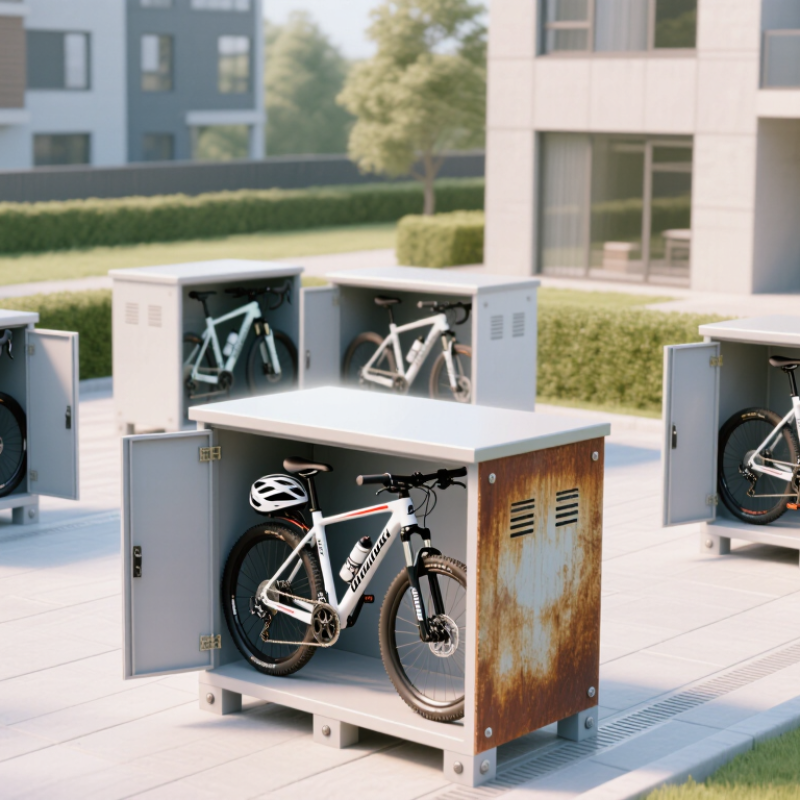
How to Choose an Outdoor Bike Storage Locker in 2026

Assess Your Bike Storage Needs and Available Space

Before choosing a locker, count every bicycle that must fit today, not only the one used most. PeopleForBikes’ 2024 U.S. Bicycling Participation Report estimates that 112 million Americans rode a bike in 2023. That figure shows widespread participation, but it cannot tell you how many bikes your household owns. Make your own inventory: adult bikes, children’s bikes, e-bikes, helmets, pumps, and wet-weather gear. Measure the longest bike and widest handlebar. Measure twice. Include room to roll each bike through the doorway without turning the handlebars into a daily puzzle.

Next, map the proposed location and mark the locker’s footprint with tape. Compare interior measurements, not just advertised exterior dimensions. Check the door swing, the route from the house, ground level, and drainage after rain. A locker may fit on paper yet block a gate or leave little room to lift out a heavy bike. Leave a clear access strip, especially if several bikes sit inside. One easy mistake is planning for the bikes but forgetting muddy tires and bulky helmets. Recheck your measurements before buying; a few centimeters can matter.

Compare Locker Materials, Designs, and Capacity

Outdoor bike lockers differ most in material, layout, and usable capacity. Powder-coated steel feels sturdy and resists everyday knocks, but damaged coatings can expose metal to moisture. Aluminum is lighter and less prone to rust, though thin panels may flex. Resin needs little upkeep and handles rain well, but heat and sunlight can affect its shape over time. Timber has a softer appearance. It needs more regular care.

Design affects daily convenience. Look for a roof that sheds rain, a raised floor or drainage openings, and vents that let damp air escape. A wide door helps when you are steering a bike with wet handlebars or a loaded basket. Check how the locker anchors to the ground, too. Small details matter.

Capacity numbers can be misleading. Measure the longest bicycle, then allow room to turn handlebars and reach the lock. A locker listed for two bikes may fit two narrow frames but leave little space for helmets or a pump. Different frame styles also need different clearances. I would leave extra room rather than trust a tight fit; that costs space, but makes everyday access easier. Before choosing, sketch the bikes’ positions and check the door swing. Measurements are easy to overlook.

Evaluate Weather Protection, Ventilation, and Security

How to Choose an Outdoor Bike Storage Locker in 2026

Weather protection starts at the roof, seams, and base. Check that the roof sheds water away from the door, and that the floor keeps runoff from pooling around tires. NOAA’s 2023 U.S. Billion-Dollar Weather and Climate Disasters report counted 28 events, with estimated losses above $92.9 billion. That figure is not a locker test, but it shows why local rain, wind, and heat deserve attention. Inspect door seals after heavy rain. Small gaps matter.

Ventilation helps limit trapped moisture, especially after a wet ride. ASHRAE Standard 160-2021 addresses moisture control in building design; its principles are useful when judging whether a locker can dry out between uses. Look for protected vents placed high and low, rather than an open gap facing the weather. A vent can also admit wind-driven rain. That trade-off needs checking. I would not assume a dry-looking exterior means the inside stays dry; condensation can hide under a saddle cover.

Security depends on the whole setup, not just a heavy door. The FBI’s 2023 Crime in the Nation report recorded a property-crime rate of 1,954.4 per 100,000 people in the United States; it does not isolate bike theft, but it supports taking physical security seriously. Check whether the locker can be anchored to a solid surface, and whether its lock area resists prying. Test the door for flex. A small weak point can undo a sturdy-looking shell.

Check Installation Requirements and Local Regulations

Before choosing an outdoor bike storage locker, measure the proposed site and the route used to reach it. Include the open door, not just the locker’s footprint. A narrow path, gate, or overhanging branch can make daily access awkward. Small details matter. Check the ground after rain, too; water pooling beneath the unit can damage stored equipment and weaken some bases.

Rules vary by location and property type. Ask your local building or planning office whether a permit, setback, or height limit applies. If you rent or live in a managed community, get written approval from the property owner or association before ordering. Also check for easements, drainage routes, and required access for emergency services. Do not guess. A quick call can prevent a costly change later.

Installation needs depend on the surface and the locker design. Confirm that the base is level, stable, and suitable for the supplied anchors. Before drilling, arrange a utility check if buried lines may be nearby. Consider wind exposure and follow the manufacturer’s installation instructions, rather than improvising with anchors that do not match the surface. I would leave extra clearance for the door and future repairs; it can feel wasteful at first, but squeezing a locker against a fence is often a mistake.

How to Choose an Outdoor Bike Storage Locker in 2026 — Check Installation Requirements and Local Regulations

Planning dimension Practical planning information What to check before installation
Locker capacity and internal space A typical adult bicycle is roughly 68–72 in (1.73–1.83 m) long. Allow additional room for handlebars, pedals, locks, and removal. Compare the locker’s usable interior dimensions—not just its outside dimensions—with the longest bike and widest handlebars you plan to store.
Door and access clearance The entry needs enough clear width for a bicycle to pass through without catching its bars or pedals. A wider opening can make everyday use easier. Measure the clear opening with the door fully open, and check that the door swing will not obstruct a path, driveway, sidewalk, or neighboring property.
Site footprint and setbacks Include the locker, door swing, access space, and any roof overhang when measuring the installation area. Confirm property boundaries and local setback rules. Required distances can vary by municipality, zoning district, structure size, and site conditions.
Permits and zoning Permit requirements may depend on factors such as floor area, height, foundation type, location, and whether the property is residential or commercial. Ask the local building or planning department whether a building permit, zoning approval, or other review is required. Do not assume a small locker is automatically exempt.
Ground preparation and drainage A firm, level base helps doors operate properly and reduces settling. Water should drain away from the locker rather than collect beneath it. Check the site for slope, soft soil, standing water, buried utilities, and drainage paths. Select a base and preparation method suitable for the ground and locker design.
Anchoring and wind exposure A lightweight enclosure can move or overturn in strong winds if it is not secured appropriately. Anchor type depends on the locker, base, and site. Follow the installation instructions and check local wind or structural requirements where applicable. Have the anchor method assessed for the actual substrate and exposure.
Fire access and egress A locker should not block required exits, fire access routes, hydrants, utility equipment, or other emergency facilities. For shared, multifamily, or commercial sites, confirm placement with the property manager and relevant fire or building authority.
Accessible routes Where accessibility rules apply, routes and clearances may be regulated. Requirements depend on the facility, project scope, and applicable jurisdiction. Keep the locker and door swing clear of required accessible routes. Check the applicable accessibility standards rather than relying on a general layout suggestion.
Homeowners’ association or lease rules Private covenants, lease terms, or property-management policies may restrict outdoor structures even when a government permit is not needed. Obtain any required written approval before ordering or preparing the site.
Security and weather protection Consider durable, corrosion-resistant materials, ventilation, a secure locking point, and protection from direct weather exposure. Check how the door and lock work, whether condensation can escape, and whether the unit is intended for the local climate and expected use.
Final site check A suitable locker must fit both the bicycles and the rules and physical conditions of the installation site. Before purchase, verify dimensions, approvals, utilities, access, base preparation, drainage, and anchoring. Local requirements vary; confirm current rules with the relevant authorities.

Compare Costs, Maintenance, and Long-Term Value

An outdoor bike locker’s purchase price is only the opening cost. Compare quotes that include delivery, anchoring, drainage, locks, and replacement parts. Then estimate annual maintenance: clearing leaves from vents, tightening hinges, and treating scratches before rust spreads. Small details matter. A locker with a low sticker price may need more frequent repairs, especially beside salted roads or in coastal air.

For a fair comparison, use the life-cycle approach in NIST Handbook 135: assess initial costs, future maintenance, replacements, and residual value over the same study period. Ask suppliers for written material specifications and repair-part availability. The American Galvanizers Association’s coating-life data indicate that galvanized steel can provide around 50 years or more of service in many non-severe environments. That figure describes coating performance, not a guaranteed locker lifespan; joints, doors, and local exposure still matter.

Consider a ten-year ownership budget, even if you expect to keep the unit longer. Include labor, lock changes, repainting, and downtime when bikes must be stored elsewhere. I would not trust a “maintenance-free” claim without details. It is easy to overlook. Check whether rainwater drains from the floor, and whether a technician can replace one damaged panel without dismantling the entire locker. A slightly higher purchase cost can make sense when repairs are simple and parts remain available.

How to Choose an Outdoor Bike Storage Locker in 2026

Estimated 10-year cost comparison by locker material (USD)

This illustrative planning model combines an estimated purchase cost with estimated annual upkeep over 10 years. It assumes resin costs $500 upfront and $20 per year to maintain; galvanized steel $900 and $50 per year; wood $700 and $100 per year; and aluminum $1,200 and $25 per year. Actual prices and maintenance depend on locker size, site preparation, climate, installation, and local labor. Compare warranties, corrosion resistance, drainage, and repairability before buying.

FAQS

How many bikes should I include when planning storage?

Count every adult and children’s bike, including e-bikes. Add helmets, pumps, and wet-weather gear. Plan for the longest bike, too.

What measurements matter before choosing a locker?

Measure the longest bike and widest handlebar. Compare the locker’s interior dimensions, not only its exterior size. Measure twice.

How can I check whether the locker fits the site?

Mark its footprint with tape. Include the open door and a clear path for rolling bikes in and out. A few centimeters can matter.

What should I check about the ground?

Look for a level, stable surface. Check after rain for pooling water, which can affect stored equipment and some bases.

Do I need approval before installing an outdoor locker?

Rules vary by location and property type. Ask the local building or planning office about permits, setbacks, and height limits. Renters should get written approval.

What could block access after installation?

Check gates, narrow paths, overhanging branches, and door swing. Leave room to lift out a heavy bike. Tight spaces look manageable on paper.

How should I choose and install anchors?

Confirm that the base suits the locker’s supplied anchors. Follow the installation instructions, and check for buried utilities before drilling. Don’t improvise.

Why leave extra space around the locker?

Extra clearance helps with daily access and future repairs. It may feel wasteful, but placing the locker against a fence can become inconvenient.

Conclusion

Choosing an Outdoor Bike Storage Locker in 2026 starts with understanding how many bikes you need to store, how often you’ll access them, and how much space is available. Compare materials and designs for durability, ease of use, and capacity, making sure the locker can accommodate your bikes without obstructing entrances or walkways. Consider whether its layout provides practical room for accessories and everyday storage needs.

Weather protection, ventilation, and security are also important: look for a design that helps keep rain out, reduces trapped moisture, and allows you to secure your bikes appropriately. Before buying, confirm that the locker can be installed on your chosen surface and check any applicable local requirements. Finally, compare the full cost, including installation and ongoing maintenance. A well-chosen locker should balance convenience, protection, and long-term value rather than simply having the lowest initial price.


Aria

Aria

Aria is a dedicated marketing professional with a deep passion for innovative strategies and a keen understanding of our company's product offerings. With a wealth of experience in the industry, Aria excels at crafting engaging content that highlights the unique features and benefits of our......