How to Choose Automatic Security Bollards for Your Site?

Time:2026-10-13 Author:Charlotte
0%

Choosing Automatic Security Bollards is not simply a matter of selecting the strongest-looking model. Your site has its own rhythm, risks, vehicles, visitors, and weak points. A hospital entrance needs different protection from a warehouse gate or a public plaza. The details matter.

Bruce Schneier, a widely respected security technologist, said, “Security is a process, not a product.” That principle applies here. Bollards should support a complete security plan, not replace it. This guide examines impact resistance, rising speed, operating cycles, control systems, lighting, drainage, visibility, and emergency access. It also considers pedestrians, delivery vehicles, wheelchair users, and maintenance teams. A powerful barrier can still create problems when its warning lights are unclear or its controls are poorly positioned.

Start with the threat assessment. What must be stopped? How often will vehicles pass? Is the ground suitable for the required foundation depth? Will rain, snow, salt, or dust affect performance? Check the product’s tested ratings and installation requirements, rather than trusting vague strength claims. Certification and testing should be verified with the manufacturer.

The right answer is rarely the tallest bollard. That is easy to forget. A quieter, slower system may suit a hotel entrance better. A heavy-duty model may be necessary at a logistics site. Even experienced teams can overlook maintenance access or power-failure procedures. Review the design on paper, then walk through it at street level. Watch a delivery van approach. Notice blind spots. Small observations often reveal the biggest mistakes.
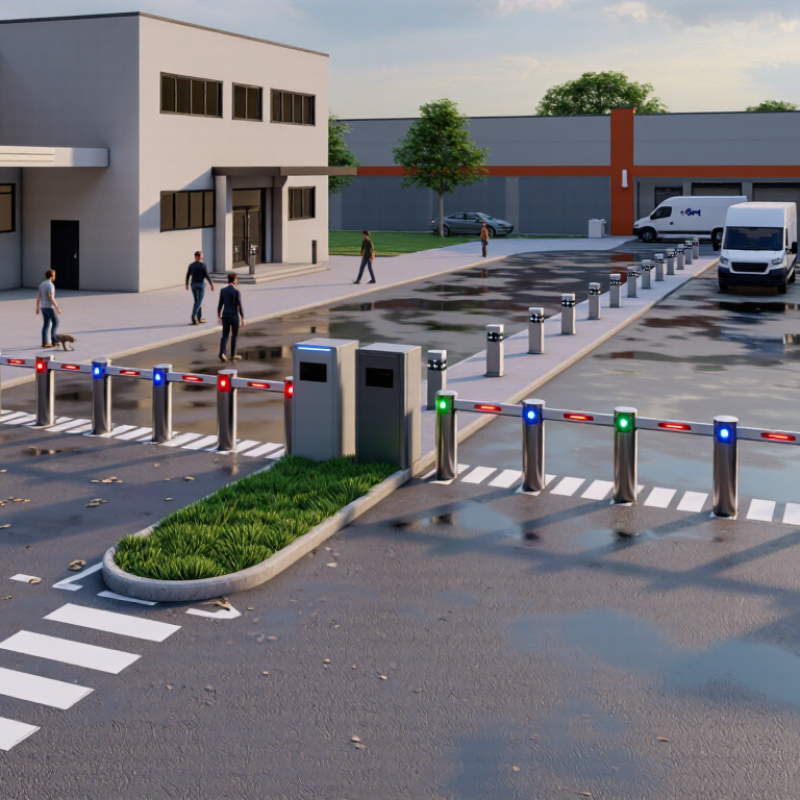
How to Choose Automatic Security Bollards for Your Site?

Define the Security Needs and Threats at Your Site

How to Choose Automatic Security Bollards for Your Site?

Define the Security Needs and Threats at Your Site

Begin with a detailed site assessment, not a product catalogue. Walk the perimeter during busy and quiet hours. Record vehicle types, entry times, pedestrian movement, and nearby public areas. A simple vehicle count can mislead. Delivery vans may create more risk than private cars. Note vulnerable points, such as glass entrances, narrow driveways, and shared service roads.

Define the threat clearly. Is the main concern unauthorized entry, accidental impact, crowd control, or repeated vehicle access? Each risk requires a different bollard specification. Check the required impact resistance, operating speed, cycle frequency, and clearance width. Emergency access also matters. The system must allow authorized response vehicles to enter without confusion. Keep access rules simple.

Consider daily conditions as well. Automatic bollards face rain, dust, standing water, and winter temperatures. Drainage around the foundation deserves close attention. Poor drainage can damage moving parts and sensors. Plan what happens during a power failure. Manual release, backup power, and visible warning signals should be included in the risk review. Do not rely on sensors alone. Sensors can miss unusual objects or behave poorly in difficult weather. A layered design is safer, although it may cost more. In practice, sites often focus on stopping vehicles and overlook pedestrians. That is a serious gap. Recheck the assessment after traffic patterns change, because yesterday’s risk profile may no longer fit the site.

Match Bollard Types to Access Control and Traffic Conditions

Automatic security bollards should be selected from real traffic conditions, not appearance. A warehouse entrance may need hydraulic retractable bollards for frequent delivery vehicles. A civic plaza may need compact electromechanical units for controlled, occasional access. According to the World Health Organization’s Global Status Report on Road Safety 2023, road crashes cause about 1.19 million deaths annually. That figure reinforces one point: vehicle separation and predictable movement matter.

Match the bollard’s impact rating to the site’s threat assessment and vehicle profile. ASTM F2656/F2656M testing provides a recognized method for evaluating vehicle-barrier performance. Record vehicle weight, approach speed, turning space, and peak daily cycles before specifying equipment. A short rising bollard may suit passenger vehicles, but heavier trucks require deeper foundations and stronger tested resistance. Do not rely on a product label alone.

Access control must also fit traffic behavior. Card readers work well at staff-only gates, while license-plate recognition can reduce stopping time at busy entrances. Add induction loops, radar, traffic lights, and safety edges where pedestrians cross nearby. NHTSA’s Traffic Safety Facts 2022 reported 7,522 pedestrian deaths in the United States. That makes closing speed and warning signals important design details. Drainage, emergency release, power failure operation, and maintenance access deserve equal attention. I would still test the complete system during rain and peak traffic. Specifications can look perfect on paper. Real sites are less cooperative.

Compare Materials, Impact Ratings, and Operating Mechanisms

Choosing automatic security bollards starts with the threat model, not appearance. Materials shape durability and repair needs. Stainless steel suits corrosive coastal air, while galvanized structural steel often provides strong value. Cast iron can look substantial, but brittle failure and coating damage deserve scrutiny. Ask for mill certificates, weld details, drainage design, and independent crash-test evidence. ASTM F2656/F2656M-23 records vehicle mass, speed, and penetration. For example, M50 P1 represents a 15,000-pound vehicle at 50 mph, with penetration limited to one metre or less. Check the tested foundation, not only the bollard.

Impact ratings should match site geometry. A civic entrance may need a different rating than a loading gate with queuing traffic. IWA 14-1:2013 reports test speed, vehicle class, and penetration, helping engineers compare unlike products. Do not treat “crash-rated” as a complete specification. It may hide weaker foundations, wider spacing, or an untested control cabinet. Operating mechanisms matter too. Hydraulic systems can tolerate frequent cycles, but leaks may disable access. Electromechanical units are cleaner, yet cold weather, grit, and power quality can expose weaknesses. Manual lowering remains useful during outages. Ratings are easy to overtrust.

Tips: Draw the vehicle approach at scale. Record daily cycles and emergency access needs. Request full test reports, installation drawings, maintenance intervals, and failure-response procedures. Require a site-specific foundation review. A rating without soil data is incomplete. Review the decision with a security engineer and the facilities team; their priorities may conflict, and that conflict should be documented.

How to Choose Automatic Security Bollards for Your Site?

Compare materials, impact ratings, and operating mechanisms using recognized engineering data and ASTM F2656 penetration classes.

Materials

Structural carbon steel and stainless steel have high density and are commonly selected for impact-resistant posts. Aluminum is much lighter and is generally better suited to low-impact access-control applications. Concrete is often used as a fixed foundation or reinforced protective element.

Impact Ratings

ASTM F2656 penetration classes describe how far a tested vehicle penetrates after impact. P1 allows penetration up to 1 m, P2 up to 7 m, P3 up to 30 m, and P4 up to 40 m. A smaller permitted penetration indicates stronger perimeter protection.

Operating Mechanisms

Hydraulic retractable bollards are commonly chosen for frequent operation and heavy-duty sites. Electromechanical systems can simplify installation and maintenance where impact requirements and operating frequency are moderate. Fixed bollards provide continuous protection but do not allow vehicle access.

Chart data: ASTM F2656/F2656M penetration-class limits. Material values are representative room-temperature densities: carbon steel 7,850 kg/m³, stainless steel 8,000 kg/m³, aluminum 6061-T6 2,700 kg/m³, and normal-weight concrete approximately 2,400 kg/m³. Material density alone does not determine bollard impact performance.

Plan Installation, Power Supply, Drainage, and Emergency Access

Choosing automatic security bollards starts with the site, not the product catalogue. Walk the entrance during rain, delivery hours, and darkness. Record lane width, turning paths, pedestrian crossings, and stopping distances. A bollard that fits a drawing may obstruct a real emergency route. Check the required impact resistance with a qualified security engineer. Site risk differs widely. Avoid selecting equipment from appearance alone.

Power planning deserves equal attention to physical security. Confirm voltage, motor load, duty cycle, control-panel location, and cable routes. Use protected conduits beneath traffic areas. Keep isolation controls accessible to trained staff. Drainage often decides whether an installation remains dependable. Excavate below the foundation as specified, add suitable drainage material, and connect it to a verified outlet. Where groundwater is high, a sump and pump may be necessary. Test after heavy rain. I once underestimated runoff from a sloped driveway. That mistake caused standing water and slower operation.

Emergency access must work when normal controls fail. Provide a clearly marked manual release or approved backup method. Coordinate access procedures with emergency responders and site management. Keep the release protected, but never hidden from authorized users. Test power failure, communication loss, and obstruction scenarios regularly. Leave enough clearance for emergency vehicles and maintenance crews. Record test dates, faults, and corrective actions. Local requirements may change. Have a competent installer verify the final design.

How to Choose Automatic Security Bollards for Your Site? — Plan Installation, Power Supply, Drainage, and Emergency Access

Planning Dimension Recommended Selection or Design Data What to Check on Site Practical Guidance
Site Security Objective Choose between traffic control, perimeter protection, hostile-vehicle mitigation, or restricted-area access. Identify the vehicle types, entry points, approach routes, operating hours, and consequences of unauthorized access. Automatic bollards intended only for access control should not be treated as vehicle-impact protection. Select a tested security-rated system when stopping hostile vehicle incursions is part of the risk assessment.
Bollard Type Fixed, removable, manual, semi-automatic, or fully automatic retractable bollards. Determine whether the opening needs frequent vehicle access, occasional maintenance access, or permanent protection. Fully automatic retractable bollards are suitable for frequently controlled entrances. Fixed or removable units may be more practical where access changes are infrequent.
Security Rating Use a product with independently verified impact-performance data where vehicle attack resistance is required. Review the test vehicle mass, impact speed, penetration distance, foundation requirements, and certification scope. Do not compare security ratings by appearance alone. The rating must match the expected threat vehicle and site layout, and should be verified against applicable local standards.
Bollard Height and Diameter Common automatic security bollards are approximately 600–900 mm above finished ground level, with diameter selected according to the required strength and visual impact. Check sight lines for drivers and pedestrians, vehicle turning paths, curb heights, and accessibility routes. Final dimensions depend on the selected system and structural design. Maintain clear visibility and avoid creating a trip hazard or narrowing an accessible pedestrian route.
Traffic Frequency Specify the expected daily cycles and peak traffic periods before selecting the actuator and control system. Record normal vehicle volume, delivery schedules, queue length, and the required raising and lowering speed. High-cycle locations require equipment designed for continuous operation, thermal protection, and convenient maintenance access. Avoid choosing solely on the basis of maximum speed.
Operating Speed Typical automatic systems may complete a movement in approximately 3–8 seconds, depending on bollard size and mechanism. Confirm whether fast operation could endanger pedestrians, cyclists, or vehicles moving through the lane. Use safety controls, warning lights, audible indicators, presence detection, and suitable time delays where rapid movement could increase collision risk.
Power Supply Provide a dedicated electrical circuit sized for the controller, motor or hydraulic power unit, lighting, detection equipment, and accessories. Confirm available voltage, cable route, maximum demand, earthing, isolation, voltage drop, and outdoor enclosure requirements. Power requirements vary by system. The electrical installation should be designed and tested by a qualified professional in accordance with local electrical regulations.
Backup Operation Consider battery backup, manual release, or a controlled emergency lowering function. Determine how the bollards will behave during a power failure, fire alarm, communications failure, or controller fault. Emergency behavior should be agreed with the site operator and emergency services. A backup system must not compromise the required security level or create an uncontrolled movement hazard.
Drainage Provide a dedicated drainage arrangement for each below-ground cassette or foundation pit. Check groundwater level, soil permeability, existing drainage services, flood risk, and the lowest surrounding finished level. Use a properly sized gravity drain where practical, or a sump and pump system where gravity drainage is not reliable. Prevent surface water from flowing directly into the pit.
Foundation and Ground Conditions Design the foundation according to the bollard supplier’s structural requirements and the site’s soil conditions. Locate underground utilities and inspect soil bearing capacity, reinforcement needs, frost conditions, and nearby structures. Impact-rated installations normally require reinforced concrete and precise alignment. Foundation dimensions must be confirmed by the project engineer rather than estimated from the visible bollard size.
Vehicle Detection Use loop detectors, radar, photoelectric sensors, access-control signals, or a combination suitable for the traffic pattern. Check vehicle types, lane width, detection zones, false-trigger sources, snow or standing-water conditions, and pedestrian movement. Detection should prevent the bollard from rising beneath a vehicle and should support safe closing after the vehicle has cleared the protected zone.
Access Control Integration Allow integration with card readers, keypads, intercoms, license-plate recognition, remote controls, or building-management systems. Confirm communication protocols, cable distances, system permissions, event logging, and cybersecurity requirements. Use a clearly defined fail-safe or fail-secure strategy. Access permissions and emergency overrides should be documented and regularly reviewed.
Emergency Access Provide a clearly marked emergency route that remains accessible when the primary control system fails. Coordinate with fire, rescue, ambulance, security, and facility-management procedures. Emergency opening methods may include a secure override switch, approved remote release, break-glass control, manual lowering, or backup power. The selected method must comply with local fire and life-safety requirements.
Pedestrian and Accessibility Safety Separate pedestrian movement from vehicle lanes wherever possible and maintain an unobstructed accessible route. Check tactile paving, wheelchair clearance, crossing visibility, bollard spacing, warning signals, and pinch points. Do not rely on bollards as a substitute for pedestrian barriers. Provide visible indicators and ensure the movement cycle cannot trap pedestrians or mobility devices.
Weather and Environment Select protection appropriate for rain, dust, salt spray, freezing temperatures, flooding, and corrosive environments. Review the enclosure rating, corrosion protection, heating requirements, wind exposure, snow clearance, and local climate. Coastal or chemically aggressive locations may require enhanced stainless-steel construction and a more intensive inspection schedule.
Visibility and Warning Systems Use reflective bands, LED indicators, illuminated signs, audible alarms, and road markings where appropriate. Assess nighttime lighting, glare, driver approach speed, background contrast, and visibility in rain or fog. Warning devices should provide clear information without causing unnecessary distraction. Coordinate signs and markings with the overall traffic-management plan.
Maintenance Access Allow safe access to the controller, actuator, drainage equipment, sensors, and manual-release mechanism. Check whether technicians can isolate power, remove covers, clean the pit, test safety devices, and replace wear parts. Establish a preventive-maintenance schedule covering cleaning, drainage testing, fastener inspection, sensor alignment, emergency release testing, and functional checks.
Installation Coordination Coordinate civil works, electrical works, traffic management, access control, drainage, and commissioning before construction begins. Confirm setting-out dimensions, lane levels, cable ducts, foundation sequence, curing time, temporary access, and final testing responsibilities. Accurate alignment and finished-level control are essential. Protect the installation from construction debris and do not commission the system until all safety devices have been tested.
Compliance and Documentation Prepare drawings, risk assessments, method statements, electrical records, test certificates, operating instructions, and maintenance records. Identify applicable building, electrical, accessibility, traffic, fire, and security regulations before procurement. Requirements vary by jurisdiction. Obtain approval from the relevant authorities and have the final design reviewed by qualified structural, electrical, and security professionals.

Evaluate Maintenance, Compliance, Costs, and Long-Term Performance

How to Choose Automatic Security Bollards for Your Site?

Evaluate maintenance, compliance, costs, and long-term performance before selecting an automatic security bollard system. Start with the site’s traffic pattern, ground conditions, and required security level. A busy loading entrance needs different equipment from a quiet office driveway. Check the bollard’s operating cycle, impact rating, drainage needs, and response time. Poor drainage can leave standing water around the mechanism. That detail is easy to miss.

Maintenance should be practical, not theoretical. Ask how often inspections, lubrication, cleaning, and safety testing are required. Confirm whether technicians can reach internal components without removing paving. Review spare-part availability and expected service response times. Compliance also matters. The system should support local access, visibility, emergency procedures, and accessibility requirements. Always verify these points with qualified local professionals. Rules vary by location.

Tips: Request a written maintenance schedule and total-cost estimate. Include installation, power use, inspections, repairs, replacement parts, and traffic management during servicing. A cheap purchase price can become expensive after repeated failures. In site assessments, I have seen small installation errors cause months of inconvenience. That experience is worth remembering. Choose corrosion-resistant materials suited to your climate, and test the system during rain, cold, and peak traffic. Do not rely only on a product brochure. Ask for documented test results, clear warranty terms, and references from comparable sites. Performance should remain dependable years later. None of this is glamorous. It is still essential.

FAQS

How should I assess my site before choosing automatic security bollards?

Walk the perimeter during busy and quiet hours. Count vehicle types, entry times, pedestrian movement, and nearby public areas. A delivery van may pose more risk than several private cars. Do not trust a quick vehicle count.

What threats should the bollard system address?

Identify whether the concern involves unauthorized entry, accidental impact, crowd control, or repeated vehicle access. Each threat requires different impact resistance, speed, cycle capacity, and clearance. The choice may not be obvious.

Why do vehicle approach and site layout matter?

Draw the approach at scale, including turning space, queues, narrow drives, and glass entrances. Check shared service roads carefully. A strong bollard can still fail when spacing or vehicle alignment is poor.

Which materials are suitable for different environments?

Corrosion-resistant steel suits coastal air and wet climates. Galvanized structural steel may offer practical value. Cast materials can appear strong, but coating damage and brittle failure deserve attention. Appearance proves little.

What evidence should I request from a supplier?

Request complete impact-test reports, tested foundation details, installation drawings, weld information, and drainage plans. A rating without soil data is incomplete. Do not rely on brochure claims alone.

How should I compare hydraulic and electromechanical mechanisms?

Hydraulic systems can handle frequent cycles, but leaks may interrupt access. Electromechanical systems are cleaner, yet grit, cold, and poor power can cause problems. Manual lowering remains useful during outages. No mechanism is perfect.

What happens during a power failure or sensor problem?

Include manual release, backup power, visible warning signals, and clear emergency procedures. Sensors may miss unusual objects or perform poorly in rain. Layered protection is safer, though usually more expensive.

What maintenance and long-term costs should I expect?

Plan inspections, lubrication, cleaning, safety tests, repairs, spare parts, and service access. Confirm technicians can reach internal components without removing paving. A low purchase price can become costly after repeated failures.

How can I confirm the system fits local requirements?

Check emergency access, visibility, accessibility, traffic control, and local approval requirements with qualified professionals. Rules vary by location. Document disagreements between security and facilities teams. Their priorities may conflict.

How should the system be tested after installation?

Test it during rain, cold weather, peak traffic, and emergency access conditions. Inspect drainage around the foundation. Small installation errors can cause months of inconvenience. Reassess the system when traffic patterns change.

Conclusion

Choosing the right Automatic Security Bollards begins with a clear assessment of your site’s security needs, traffic patterns, and potential vehicle threats. Consider where access must be restricted, how frequently vehicles enter and exit, and how the bollards should connect with gates, barriers, identification systems, or other access controls. Select a bollard type that suits the operating environment, then compare materials, impact ratings, visibility, and operating mechanisms to ensure reliable performance.

A successful installation also requires careful planning for foundations, power supply, drainage, control equipment, emergency access, and safe pedestrian movement. Before making a decision, evaluate maintenance requirements, relevant safety and construction standards, installation costs, energy use, and expected service life. A well-planned system should provide dependable protection without disrupting daily operations. By balancing security performance, convenience, compliance, budget, and long-term durability, site owners can choose Automatic Security Bollards that remain effective and practical throughout their operational life.


Charlotte

Charlotte

Charlotte is a seasoned marketing professional with a deep understanding of the company's portfolio and a passion for elevating its presence in the market. With a keen eye for detail and a commitment to excellence, she ensures that our professional blog is regularly updated with insightful articles......