Finding the best Automatic Bollards Price worldwide requires more than comparing numbers on supplier websites. A serious buyer must examine product quality, installation conditions, warranty terms, and long-term operating costs. A bollard may look affordable in a quotation, yet become expensive when shipping, foundation work, wiring, or maintenance is added.
This guide explains how experienced buyers evaluate automatic bollard suppliers across different markets. It considers stainless steel grade, lifting speed, impact resistance, control systems, drainage design, and replacement-part availability. These details matter at a hotel entrance, factory gate, parking facility, or public access road. A dependable supplier should provide clear technical drawings, test information, project references, and realistic delivery schedules.
Prices vary for good reasons. Hydraulic models, electromechanical models, and solar-supported systems do not share the same cost structure. Local labor rates also influence the final budget. So does currency movement. A cheaper unit is not always the better investment.
Look beyond the first quotation.
Reliable purchasing also requires careful questions. Does the supplier understand the site’s traffic volume? Can the bollards operate during power interruptions? Is emergency lowering included? Are installation instructions genuinely practical? Some brochures promise too much. That deserves scrutiny.
The aim is not to find the lowest figure. It is to find a balanced Automatic Bollards Price that reflects safety, durability, service support, and verified performance. This approach may take longer, but it reduces unpleasant surprises after delivery. Mistakes can still happen. Careful comparison simply makes them less likely.
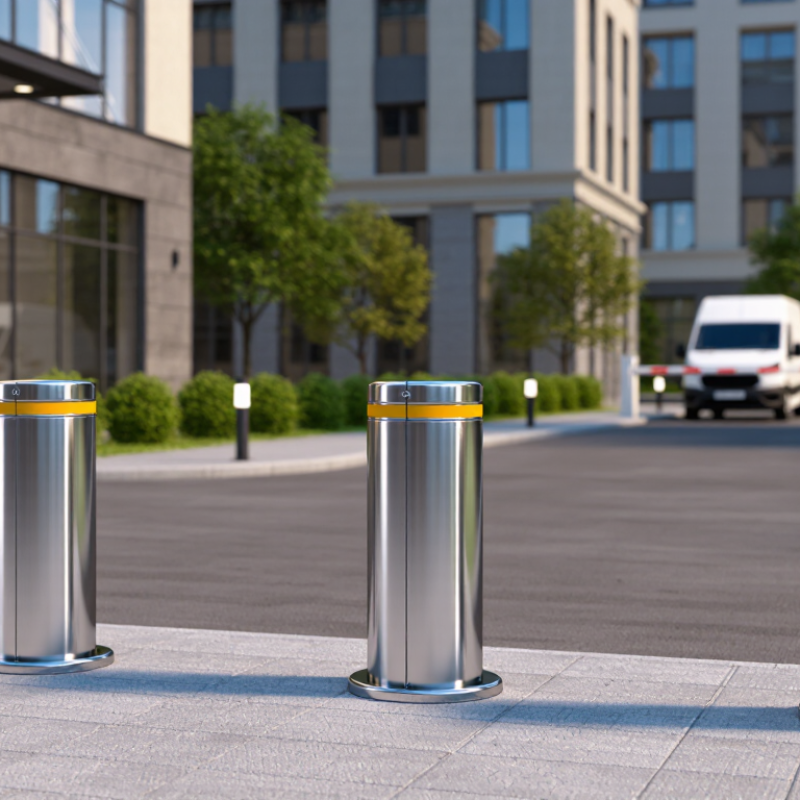
How to Get the Best Automatic Bollards Price Worldwide
Understanding Automatic Bollards and Their Main Applications
Automatic bollards are retractable security posts that control vehicle access without blocking pedestrians. They protect entrances, loading zones, public squares, and sensitive facilities. A typical system includes steel posts, hydraulic or electromechanical drives, sensors, barriers, and emergency controls. The application determines the required strength, rising speed, duty cycle, and installation depth.
Urban demand is increasing. UN DESA’s World Urbanization Prospects estimates that 68% of the global population may live in cities by 2050. More crowded streets require controlled vehicle movement and safer pedestrian areas. The WHO Global Status Report on Road Safety 2023 records about 1.19 million road deaths annually. Bollards cannot solve every traffic risk. They can, however, separate vehicles from vulnerable spaces.
Security performance needs careful verification. CISA’s Vehicle Ramming Mitigation Security Guide recommends assessing vehicle approach routes, impact exposure, and surrounding site conditions. Standards such as ASTM F2656 and IWA 14-1 help compare tested vehicle-impact resistance. Prices vary widely because foundations, drainage, power supply, control systems, testing, and local labor affect the final cost. A cheaper unit may become expensive after excavation problems appear. This is often overlooked. Poor visibility, slow maintenance access, or unsuitable drainage can also reduce real-world reliability. A proper quotation should list impact rating, cycle frequency, warranty scope, replacement parts, and installation requirements.
They control vehicle access while keeping pedestrian routes open. Common locations include entrances, loading areas, public squares, and sensitive facilities. They rise from the ground when access must be restricted.
A system usually contains steel posts, a hydraulic or electric drive, sensors, controls, and emergency release equipment. It may also require barriers, drainage, wiring, and a reinforced foundation. Small details matter.
Compare complete systems, not single-unit prices. Request matching specifications for post diameter, rising height, impact resistance, operating cycles, controls, shipping, and installation. Otherwise, the comparison may be misleading.
The quoted price may exclude excavation, concrete, drainage, taxes, freight, commissioning, or local labor. A narrow entrance may also require night work and temporary access arrangements. The low price is not always low.
Request test reports for the exact quoted model. Check welds, protective coating, wiring, drainage, emergency lowering, sensor response, and packaging. A sample unit can reveal rough finishing or loose connections.
Inspect soil conditions, water levels, excavation depth, power routes, cable paths, and traffic access. Drainage is especially important. Water ingress can damage otherwise suitable equipment.
Maintenance can become a major part of lifecycle spending. Include inspections, replacement seals, controller upgrades, spare parts, and service visits. Busy entrances may require quarterly checks.
It should state impact rating, operating cycles, corrosion protection, emergency release, warranty limits, and replacement parts. It should also list exclusions and installation assumptions. Read every line.
Not necessarily. The correct choice depends on vehicle exposure, traffic volume, entrance width, soil, and emergency needs. Over-specifying can increase cost without improving the whole site.
Confirm spare-part availability, technical response times, warranty coverage, and commissioning support in writing. Independent inspection before shipment may expose missing parts or incorrect materials. Even factory visits have limits.
Finding the best Automatic Bollards Price worldwide requires more than comparing listed prices. First, understand how automatic bollards work and where they are used, such as parking areas, commercial entrances, public spaces, and sites requiring controlled vehicle access. Compare rising, retractable, and hydraulic or electric models by security level, operating speed, materials, weather resistance, safety features, and expected service life. These factors determine whether a product is suitable for light traffic, frequent daily use, or demanding access-control environments.
When evaluating international suppliers, request clear specifications, test records, warranties, installation guidance, and reliable quality documentation. Calculate the total cost, including transportation, customs-related expenses, foundation work, electrical connections, commissioning, routine inspections, spare parts, and future maintenance. During negotiations, clarify order quantities, delivery schedules, payment terms, technical support, and after-sales responsibilities. The best value offer is not always the lowest quotation; it is the option that combines dependable performance, transparent costs, appropriate installation requirements, and long-term operational value.

 KAVASS