Choosing reliable Retractable Driveway Bollards requires more than comparing factory prices. Performance depends on steel grade, lifting mechanisms, control systems, drainage design, and installation support. This guide examines China’s top 10 manufacturers through practical selection criteria, not advertising language. It focuses on suppliers with documented production experience, consistent quality management, and clear technical documentation.
The review considers automatic and hydraulic bollards for homes, commercial entrances, parking areas, and controlled-access sites. Important details include impact resistance, operating cycles, weather protection, emergency release options, and maintenance access. A well-designed unit should rise smoothly, stop safely, and remain stable after repeated use. Small details matter. Poor drainage can damage internal components, especially during heavy rain or freezing conditions.
Supplier credibility also requires careful checking. Factory audits, sample testing, warranty terms, installation manuals, and after-sales communication can reveal more than a polished website. Certifications should be verified against the destination market and project requirements. No ranking is perfectly objective. Some published performance claims may need independent confirmation. Buyers should request test reports, wiring diagrams, spare-parts information, and references from comparable installations. This approach supports informed decisions while reducing costly replacement risks. The final choice should match traffic frequency, security expectations, available space, and local installation conditions. A cheaper bollard may not be economical when service delays interrupt daily access. Performance is important. Support matters too.
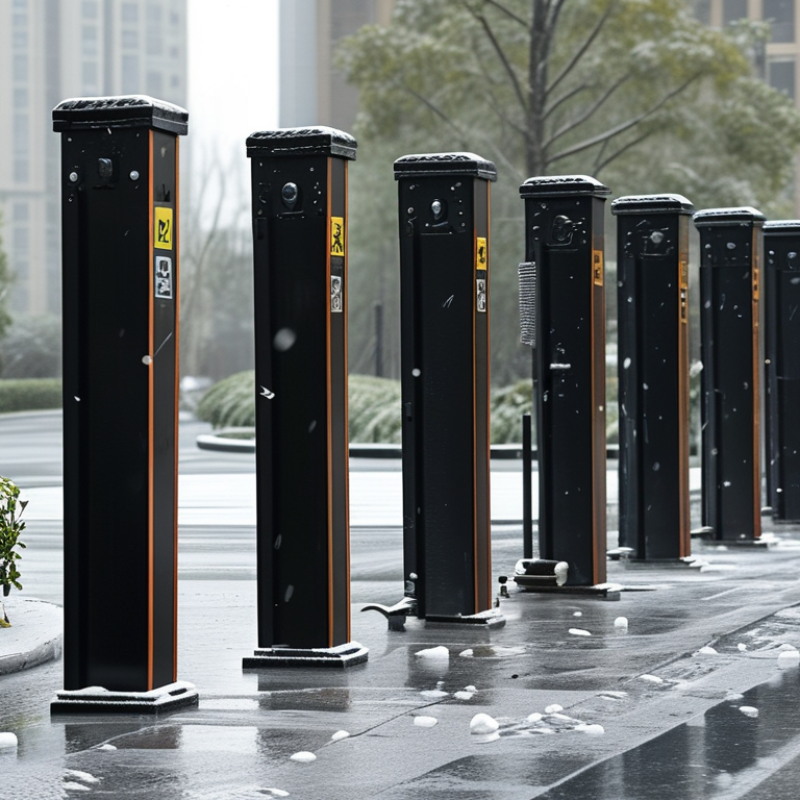
Retractable driveway bollards are vertical security posts that disappear below ground when access is approved. A buried sleeve holds the bollard, while an electric, hydraulic, or pneumatic actuator raises it again. At a private driveway, the sequence may begin with a keypad, remote control, vehicle tag, or intercom.
Simple, but not effortless.
A controller checks the command, then moves the post through a guided cycle. Safety loops, photocells, and pressure sensors can stop movement when a vehicle or person enters the path. In a power failure, approved systems may use manual release, battery backup, or automatic lowering. The choice affects both safety and maintenance.
Market figures show why this equipment is receiving attention. Fortune Business Insights valued the global access control market at about USD 9.9 billion in 2022, forecasting growth to roughly USD 17.3 billion by 2030. Its report links growth to connected entry systems and stronger site-security requirements. However, a larger market does not guarantee a suitable driveway solution.
Buyers should check cycle speed, duty rating, drainage, corrosion resistance, and replacement access. Impact protection requires documented testing, such as ASTM F2656 or ISO 22343 procedures. These standards do not automatically make every bollard crash-rated. That assumption is risky. Installation records, soil conditions, and routine inspection often decide real-world performance more than the product brochure.
When evaluating Chinese retractable driveway bollard manufacturers, start with the product’s working environment. A coastal entrance needs stronger corrosion protection than an indoor loading bay. Ask for stainless-steel grade, coating thickness, drainage design, and IP rating. Request test reports, not only catalogue promises. The controller should support safe stopping, manual release, and obstacle detection. These details affect daily reliability.
Study the lifting mechanism and duty cycle carefully. A busy hotel entrance may require hundreds of movements each day. Confirm motor temperature limits, recovery time, noise level, and expected service life. Ask whether the stated cycle count comes from laboratory testing or installed projects. A high number can look impressive. It may not reflect winter dirt, heavy rain, or voltage changes. Review installation drawings, cable requirements, foundation dimensions, and emergency access procedures with a qualified engineer.
Reliable manufacturers explain quality control from incoming steel to final assembly. Look for serial-number traceability, documented inspections, and samples tested before shipment. Factory video calls can reveal assembly discipline, though they never replace independent inspection. Check spare-part availability, warranty terms, technical support, and response times in writing. Custom finishes are useful, but excessive customization can complicate maintenance. I would rather choose a plain unit with proven parts than a polished prototype. That preference can be wrong, so compare references, test a sample, and record every assumption before ordering.
Key Features for Evaluating Chinese Bollard Manufacturers
This neutral 100-point procurement checklist prioritizes the features that should be verified when comparing retractable driveway bollard manufacturers. Buyers should request independent test reports, IP and IK protection evidence, impact-resistance documentation, cycle-test records, installation requirements, warranty terms, and after-sales service details. The scores represent evaluation priority, not market share or performance claims about any specific company.
China’s Top 10 Retractable Driveway Bollard Manufacturers are often evaluated through engineering quality, production control, and field performance. A reliable shortlist should include factories with proven experience in automatic and manual retractable systems. Their products may use stainless steel or galvanized steel bodies, reinforced housings, and sealed control cabinets. These details matter in rain, dust, and frequent vehicle access.
The strongest manufacturers normally provide load testing, corrosion checks, waterproof ratings, and repeated-cycle testing. Ask for factory records, inspection reports, installation drawings, and clear warranty terms. A well-designed bollard should rise smoothly, stop safely, and drain water from its foundation. Emergency release systems also deserve close attention. Small design gaps can create expensive maintenance problems.
The top ten should not be judged by price alone. Production capacity, replacement-part availability, response time, and technical support reveal more about reliability. Some factories offer useful customization, such as remote controls, loop detectors, warning lights, and access-control integration. However, customization can complicate repairs. That is an important trade-off. In our view, an honest manufacturer explains limitations instead of promising perfect performance. No shortlist is flawless. Buyers should verify samples, inspect welds, test operating noise, and confirm local installation conditions before placing a large order.
Comparing retractable driveway bollards requires more than checking price or appearance. Product design matters at the entrance. Look for hydraulic, pneumatic, or electric systems matched to traffic frequency. A busy commercial driveway needs stronger cycle performance than a private residence. Check steel thickness, impact resistance, drainage, noise, and emergency lowering. IP ratings and corrosion protection also deserve attention, especially in coastal areas.
Certifications should support real testing, not decorate a sales page. Request ISO 9001 evidence, CE documentation, RoHS compliance, and product-specific test reports where applicable. Certification requirements vary by destination market. Ask who performed the tests and when. A brochure is not proof. I would also compare control panels, loop detectors, remote controls, and safety sensors under the same conditions. Small differences can affect daily reliability.
Customization often includes bollard height, diameter, stainless-steel grade, surface finish, warning lights, voltage, and installation depth. Good manufacturers provide clear drawings before production. Service is equally important. Confirm sample approval, lead times, warranty coverage, spare-part availability, installation guidance, and response times. Request videos of factory testing, but inspect the actual unit when possible. Photos can hide weak welds or poor drainage. One imperfect detail may become an expensive maintenance problem. Recheck every specification before signing.
Selecting a manufacturer requires more than comparing online prices. The 2023 WHO Global Status Report on Road Safety recorded about 1.19 million annual road deaths worldwide. That figure reinforces the need for tested vehicle control systems, not decorative posts. When reviewing ten Chinese manufacturers, request test reports, installation records, and photographs from comparable driveways. A polished sample can mislead.
Check whether the bollard design suits your site conditions. Confirm impact testing against ASTM F2656 or IWA-14-1, where applicable. Ask for stainless-steel grade, drainage design, cycle testing, and ingress protection ratings. A coastal driveway needs stronger corrosion protection. A busy commercial entrance needs reliable motors and fast recovery. Grand View Research reported that the global smart parking market exceeded USD 6 billion in 2023, with strong projected growth. Integration skills now matter more.
Audit the factory, or appoint an independent inspector. Review welding quality, controller access, spare-part availability, and warranty response times. Ask for a witnessed factory acceptance test. Require clear drawings showing foundation depth, drainage, cable routes, and emergency operation. Do not trust vague claims such as “heavy duty.” No checklist is perfect. I would still test one unit through repeated wet-weather cycles before approving a large order. The cheapest quotation may become expensive after installation. A dependable supplier explains limitations openly, including noise, maintenance intervals, and recovery time after power loss.
Check engineering quality, production control, field performance, and technical support. Price alone is not enough.
Common options include stainless steel and galvanized steel. Reinforced housings can improve impact resistance and service life.
Request load tests, corrosion checks, waterproof ratings, and repeated-cycle records. A brochure is not proof.
Hydraulic, pneumatic, and electric systems can work. Choose based on traffic frequency, cycle performance, maintenance access, and site conditions.
Check emergency lowering, safety sensors, warning lights, smooth stopping, and reliable drainage. Small gaps can cause costly problems.
No. Request current ISO 9001 evidence, CE documents, RoHS compliance, and product-specific test reports where applicable.
Options may include height, diameter, steel grade, finish, voltage, warning lights, remote controls, and loop detectors.
Yes. Special controls and unusual parts may complicate repairs. Confirm replacement-part availability before ordering.
Ask for installation drawings, inspection reports, warranty terms, technical specifications, and sample approval records.
Test operating noise, movement, weld quality, drainage, emergency release, and control response. Photos may hide weak details.
Confirm lead times, installation guidance, warranty coverage, spare parts, and response times. Support matters during a rainy repair.
Not immediately. Videos help, but inspect an actual unit whenever possible. One untested assumption can become expensive.
This guide explores how Retractable Driveway Bollards protect residential, commercial, and public access points by rising from the ground when security is needed and lowering to allow authorized vehicle movement. It explains key operating methods, structural materials, impact resistance, control options, safety systems, weather protection, installation requirements, and maintenance considerations. The article also presents a practical comparison of China’s top 10 retractable driveway bollard manufacturers without focusing on brand promotion, helping readers understand differences in product quality, manufacturing capability, certifications, customization options, lead times, warranty coverage, and after-sales service.
To select the right manufacturer, buyers should evaluate project requirements such as security level, traffic frequency, driveway dimensions, climate, control integration, budget, and installation conditions. A reliable supplier should provide clear technical documentation, consistent quality control, responsive communication, and solutions tailored to the site. By comparing these factors systematically, purchasers can make a confident decision and choose durable, safe, and cost-effective bollards for long-term use.

KAVASS