Top 10 Bike Lockers For Sale Worldwide

Time:2026-10-28 Author:Charlotte
0%

Choosing the right Bike Lockers For Sale requires more than comparing prices or polished product photos. A reliable locker should protect bicycles from rain, dust, tampering, and accidental damage. It should also fit real spaces, from crowded train stations to apartment courtyards and workplace entrances.

Dr. Peter Furth, a respected bicycle-transportation researcher, has stated, “Bicycle parking is an essential part of the transportation system.” That principle shapes this worldwide guide. A locker is not merely a metal box. It influences commuting confidence, property management, user safety, and long-term maintenance costs. The best designs provide solid construction, practical access, ventilation, and enough internal clearance for different bicycle sizes. Some also include charging provisions for e-bikes, though electrical features require careful installation and maintenance.

Small details matter.

A narrow door can frustrate daily users. Poor drainage can create hidden corrosion. Weak anchoring may reduce security, even when the lock looks impressive. Our selection considers these practical weaknesses alongside durability, weather resistance, accessibility, installation requirements, and supplier support. Product availability also changes by region, so buyers should verify shipping, warranties, local standards, and replacement-part access before ordering.

This list is not perfect. No single locker suits every climate, budget, or building layout. A premium model may exceed a small property’s needs, while a cheaper option may demand more maintenance. The following Top 10 Bike Lockers For Sale compares those trade-offs clearly, helping readers choose protection that works beyond the showroom.
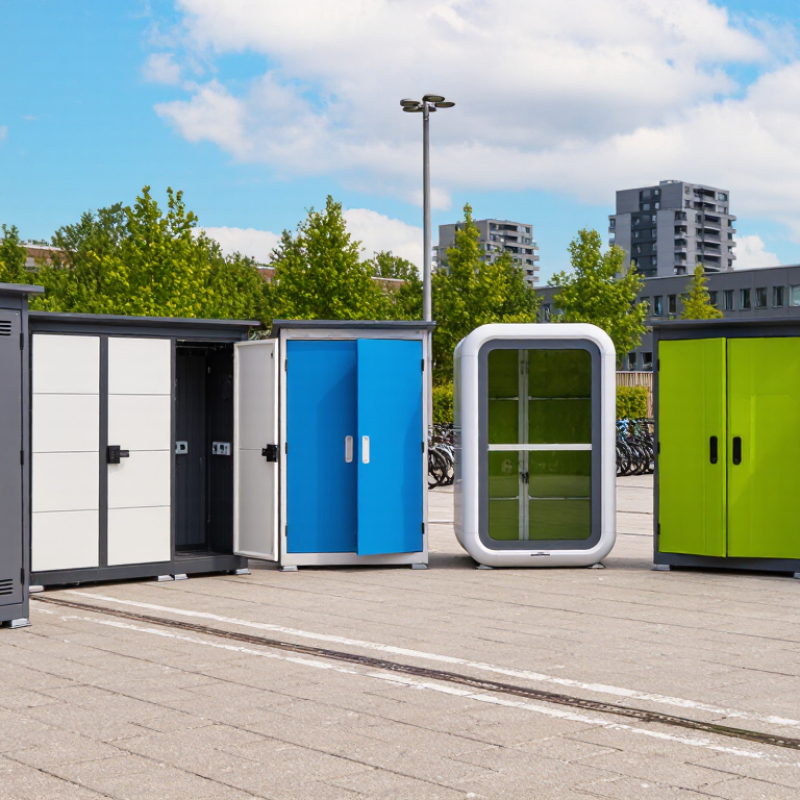
Top 10 Bike Lockers For Sale Worldwide

What Bike Lockers Are and How They Protect Bicycles

Bike lockers are enclosed storage units designed to protect bicycles from rain, sunlight, theft, and accidental damage. Unlike open racks, they surround the frame, wheels, and often the rider’s helmet. Common designs include single lockers, two-bike compartments, and larger shared units for workplaces or transport stations.

A dependable locker should use corrosion-resistant materials and a roof that sheds water without pooling. Drainage matters. After heavy rain, standing water can reach wheels and chains through small gaps. Ventilation also reduces condensation, especially when a wet bicycle enters the compartment. Look for reinforced doors, secure internal anchoring, and an access system that does not scrape the bicycle frame. Clear internal measurements are essential for bikes with wide handlebars, baskets, child seats, or electric-assist batteries.

When comparing the top 10 bike lockers for sale worldwide, buyers should inspect installation requirements, service access, and replacement-part availability. A strong unit can still fail if its foundation is uneven or its hinges are neglected. That detail is often missed. Good sellers provide load information, material specifications, cleaning guidance, and realistic delivery conditions. Buyers should also check local space, lighting, drainage, and user visibility before ordering. No locker removes every risk. However, a well-designed enclosure makes bicycle storage cleaner, more organized, and considerably harder to tamper with.

Key Features to Compare Before Buying a Bike Locker

Top 10 Bike Lockers For Sale Worldwide

Before buying a bike locker, inspect its steel thickness, frame strength, and anchoring method. A locker should resist prying, impact, and repeated daily use. Galvanized or powder-coated surfaces usually handle rain better than untreated metal. Still, even strong coatings can fail around scratches and exposed bolts.

Check the internal dimensions carefully. Leave enough space for handlebars, pedals, and a wet helmet. Ventilation matters because trapped moisture can damage chains, bags, and clothing. Look for drainage channels rather than a flat floor. I once tested a compact locker that looked efficient, but its narrow door made loading awkward. Small dimensions can create daily frustration.

Compare the locking system, access control, and emergency opening procedure. Mechanical locks are simple, while electronic systems may offer usage records and flexible access. Electronic parts need reliable power protection and weather sealing. Review installation requirements, surface compatibility, spare-part availability, and warranty terms. A poorly anchored unit is not truly secure. Ask whether the locker can be inspected without special equipment. User visibility also matters; placement near lighting and regular foot traffic can discourage tampering. I would not choose the cheapest option automatically. Price matters, but repair time and replacement parts matter too. One overlooked detail can outweigh an attractive specification sheet.

Top 10 Bike Lockers for Sale Worldwide

Top 10 Bike Lockers for Sale Worldwide

The top 10 bike lockers for sale worldwide should be judged by security, weather resistance, capacity, and daily convenience. Strong steel panels protect bicycles from rain, dust, and accidental impact. Lockers with ventilation reduce condensation, especially in humid coastal regions. Check the internal width before buying. Wide handlebars, baskets, and electric-bike frames need extra space. Some compact units look practical online but feel restrictive after installation.

A reliable comparison also considers assembly, anchoring, drainage, and access. Ground-mounted lockers need a stable, level surface. Wall-mounted designs can save space, but they may require stronger structural support. Key locks are simple, while coded or electronic systems may improve shared access. However, batteries can fail during cold weather. No locker is perfect. I would inspect hinges, seams, and floor clearance before trusting a product with an expensive bicycle.

Tips: Measure your bicycle first. Leave room for a helmet and wet clothing. Choose rust-resistant finishes near the sea. Ask whether replacement parts are available locally. Review delivery limits and installation guidance for your region. A bright interior or integrated light can help users find small items at dusk. I once underestimated door clearance, and that mistake made everyday parking unnecessarily awkward.

Top 10 Bike Lockers for Sale Worldwide

This comparison presents ten common bike-locker configurations available across international markets, ranked by typical secure bicycle capacity. Options range from compact single-bike lockers to larger modular units designed for shared residential, workplace, transit, and public facilities.

Best Bike Lockers by Location, Capacity, and Security Level

Top 10 Bike Lockers For Sale Worldwide

The best bike locker depends on its location, not only its appearance. Outdoor stations need weather-resistant steel, drainage, and secure ground anchoring. Indoor lockers can prioritize ventilation, compact doors, and quiet operation. Near offices, a narrow vertical unit saves floor space. At schools or transit hubs, visibility matters because users need confidence and easy access. A locker hidden behind a wall may offer privacy, but it can discourage regular use.

Capacity should match real demand. Single lockers suit commuters carrying one bicycle and a small bag. Two-tier units increase storage, though taller bikes may not fit comfortably. Large shared cabinets work well at workplaces, but they require clear user rules and reliable access control. Security levels should include a strong frame, protected hinges, tamper-resistant locks, and adequate lighting. Digital access can improve tracking, yet it adds maintenance needs. More technology is not always safer.

Tips: Measure bicycles, handlebars, and nearby walking space before ordering. Check drainage after heavy rain. Ask for corrosion testing and replacement-part availability. Inspect the anchoring method, not just the lock. A polished product can still have weak ventilation or awkward doors. I would also test one sample with winter gloves and a loaded backpack; small inconveniences often become daily frustrations.】【。

Top 10 Bike Lockers For Sale Worldwide - Best Bike Lockers by Location, Capacity, and Security Level

Rank Locker Configuration Best-Suited Location Capacity Typical Dimensions Construction Access and Locking Security Level Weather Protection Indicative Price Range
1 Fully Enclosed Individual Locker
Premium single-user protection
Rail stations, residential developments, universities, and office campuses 1 bicycle plus helmet and small accessories Approximately 1,900 × 800 × 1,200 mm Galvanized steel or aluminum panels with reinforced frame Key, combination, RFID, or electronic access; floor anchoring recommended Level 4 — Very High Fully enclosed; high resistance to rain, dust, and casual tampering US$900–2,500
2 Secure Multi-Bike Locker Room
Shared access enclosure
Public transport interchanges, commuter hubs, and municipal bicycle centers 10–20 bicycles Approximately 4,000–7,000 × 2,500–3,000 × 2,300 mm Steel or aluminum enclosure with mesh or solid wall sections Controlled door entry with keypad, card, mobile credential, or staffed access Level 4 — Very High Roofed and enclosed; drainage and ventilation should be included US$15,000–50,000
3 Double-Sided Vertical Locker Bank
High-density space-saving design
Dense urban sites, apartment buildings, parking structures, and campuses 8–16 bicycles Approximately 2,000–4,000 × 1,200–1,800 × 2,100–2,400 mm Powder-coated galvanized steel with internal wheel guides Individual doors with mechanical or electronic locks Level 3 — High Suitable for sheltered or semi-exposed installation US$7,000–24,000
4 Heavy-Duty Outdoor Bicycle Cabinet
Corrosion-resistant exterior unit
Coastal cities, public streets, workplaces, and outdoor commuter areas 2–6 bicycles Approximately 2,000–3,500 × 900–1,500 × 1,300 mm Hot-dip galvanized steel, stainless steel fittings, and weather seals Padlock hasp, cylinder lock, or weather-rated electronic lock Level 3 — High Rain-resistant; select marine-grade finishes for salt-air environments US$2,500–10,000
5 Compact Apartment Bicycle Locker
Residential shared-storage format
Apartment complexes, condominium garages, and mixed-use developments 2–4 bicycles Approximately 2,000–2,500 × 900–1,200 × 1,300 mm Powder-coated steel or aluminum with a ventilated rear panel Resident key, combination lock, or building access-control integration Level 3 — High Best under a canopy, in a garage, or beside a covered entrance US$1,800–6,500
6 Two-Tier Bicycle Storage Locker
Capacity-focused configuration
Transit stations, corporate campuses, schools, and large workplaces 12–24 bicycles Approximately 4,000–6,000 × 2,000–3,000 × 2,300 mm Steel frame, galvanized mesh, and two-level wheel racks Single controlled entrance with internal locking positions Level 3 — High Usually roofed and ventilated; not fully sealed against wind-driven rain US$18,000–55,000
7 Modular Bicycle Storage Pod
Expandable sectional system
Events, business parks, temporary developments, and public facilities 6–12 bicycles per module Approximately 2,500–4,500 × 1,800–2,500 × 2,100–2,400 mm Prefabricated steel or aluminum sections with replaceable panels Individual locking bays or one shared access door Level 2 — Moderate to High Weather-resistant; installation quality affects long-term protection US$8,000–28,000
8 Bicycle-and-Cargo-Bike Locker
Oversized compartment design
Family housing, delivery hubs, workplaces, and mobility centers 1 cargo bicycle or 2 standard bicycles Approximately 2,500–3,000 × 1,200–1,600 × 1,400 mm Reinforced steel or aluminum with wide-access doors Heavy-duty latch with key, combination, or electronic locking option Level 3 — High Enclosed and rain-resistant; ventilation is recommended for wet bicycles US$2,500–8,500
9 Mesh-Sided Secure Bicycle Compound
Visible and ventilated storage
Warm climates, sports centers, schools, and covered parking areas 10–30 bicycles Approximately 3,000–8,000 × 2,000–3,000 × 2,100–2,400 mm Welded steel mesh, steel posts, roof panels, and ground anchors Gated entry with padlock, keypad, card reader, or access-control system Level 2 — Moderate to High Excellent ventilation; provides limited protection from wind-driven rain US$10,000–35,000
10 Basic Covered Bicycle Locker
Cost-effective entry configuration
Small workplaces, schools, private homes, and low-risk neighborhood locations 1–3 bicycles Approximately 1,900–2,500 × 800–1,200 × 1,200–1,400 mm Powder-coated steel, aluminum, or durable polymer panels Standard key lock, hasp, or weather-resistant combination lock Level 1 — Basic Covered and partially enclosed; additional anchoring improves safety US$700–3,000

Price ranges are indicative international market estimates in US dollars for typical commercial configurations and may vary according to materials, transport, installation, access-control equipment, site preparation, and local regulations. Security ratings are comparative classifications based on enclosure strength, lock type, visibility, anchoring, and resistance to unauthorized access.

Installation, Maintenance, and Safe Usage Considerations

A dependable bike locker begins with the site, not the catalogue. Choose a visible, well-lit location near the entrance, with a firm, level surface and clear drainage. The World Health Organization’s Global Status Report on Physical Activity 2022 states that 31% of adults worldwide do not meet recommended activity levels. Convenient, secure bicycle storage can remove one practical barrier to riding.

For the top 10 bike lockers for sale worldwide, compare anchoring methods, internal dimensions, ventilation, and access control. The Association of Pedestrian and Bicycle Professionals’ Essentials of Bike Parking recommends parking that supports the frame and remains easy to use. Allow space for handlebars, bags, and wet clothing. Keep entrances wide enough for everyday movement. A locker that looks efficient on paper may feel cramped beside a cargo bicycle. Measure real bicycles before ordering.

Maintenance should follow a written schedule. Inspect hinges, locks, bolts, seals, and floor drains each month. Remove grit before it damages moving parts. Check lighting and access records regularly, while protecting user privacy. The CROW Design Manual for Bicycle Traffic stresses accessibility, security, and convenient placement. I have seen neglected lockers become storage rooms for dust and broken accessories. That failure is preventable, but not always. Users should lock the bicycle frame, close the door fully, and report damage quickly. Do not overload the compartment.

FAQS

What is a bike locker?

A bike locker is an enclosed unit for storing bicycles. It protects frames, wheels, helmets, and bags. Unlike open racks, it provides a physical barrier.

What problems can a bike locker prevent?

It helps reduce exposure to rain, sunlight, accidental impacts, and tampering. It also keeps bicycles cleaner and more organized. No locker removes every risk.

Which materials should buyers consider?

Look for corrosion-resistant metal, reinforced doors, strong frames, and protected fasteners. Galvanized or coated surfaces usually handle rain better. Scratches still need attention.

How important are internal dimensions?

They are extremely important. Measure handlebars, pedals, baskets, child seats, and batteries before ordering. A narrow door can make daily loading frustrating.

Where should a bike locker be installed?

Choose a visible, well-lit location near an entrance. The surface should be firm and level. Good drainage prevents water from reaching chains and wheels.

What access systems are available?

Mechanical locks are simple and usually easy to maintain. Electronic systems may record usage and support flexible access. They need weather protection and dependable power.

How should a bike locker be maintained?

Inspect hinges, locks, bolts, seals, and drains monthly. Remove grit from moving parts. Check for standing water after heavy rain. Small neglect can become expensive.

How should users store bicycles safely?

Lock the bicycle frame, close the door fully, and avoid overloading the compartment. Keep wet clothing from blocking ventilation. Report damage quickly, though people sometimes delay it.

Conclusion

Bike lockers are secure storage units designed to protect bicycles from theft, weather, vandalism, and accidental damage. This guide to Bike Lockers For Sale explains how enclosed, semi-enclosed, and modular locker systems can support commuters, residents, schools, workplaces, and public facilities. It highlights key buying factors, including construction materials, locking mechanisms, ventilation, weather resistance, accessibility, footprint, capacity, visibility, and compatibility with different bicycle sizes and accessories.

The article compares ten practical bike locker options from around the world without focusing on brand names, helping readers match each design to its location, storage capacity, and desired security level. It also explains how to evaluate lockers for individual, shared, or high-volume use, along with essential guidance on installation, surface preparation, anchoring, drainage, routine cleaning, corrosion checks, lock maintenance, and safe daily usage. By considering these factors together, buyers can select a durable, convenient, and appropriately secure bicycle storage solution.


Charlotte

Charlotte

Charlotte is a seasoned marketing professional with a deep understanding of the company's portfolio and a passion for elevating its presence in the market. With a keen eye for detail and a commitment to excellence, she ensures that our professional blog is regularly updated with insightful articles......