Top 10 Outdoor Bike Locker Manufacturers Worldwide

Time:2026-09-23 Author:Aria
0%

Choosing an Outdoor Bike Locker is not simply a matter of comparing attractive product photos. Real performance appears after months of rain, dust, repeated locking, and daily commuter use. A reliable locker should protect bicycles from weather, theft risks, and unnecessary damage while remaining practical for installation and maintenance.

This guide introduces the Top 10 Outdoor Bike Locker Manufacturers Worldwide through clear, experience-based criteria. We consider enclosure materials, corrosion resistance, drainage, ventilation, locking systems, capacity, accessibility, and replacement support. We also examine installation instructions, warranty clarity, published specifications, and documented project experience. These details matter. A strong product should survive more than a showroom inspection.

Feedback from transport planners, property managers, installers, and regular cyclists can reveal problems that brochures rarely mention. Door alignment, water pooling, awkward floor clearance, and difficult key access may become serious issues over time. Manufacturer reputation is important, but it should not replace practical evidence. No ranking is perfect. Regional weather, site security, user habits, and budget can change the final decision.

The companies discussed here are presented as reference points, not automatic recommendations. Readers should confirm current specifications, local service coverage, lead times, and installation requirements before purchasing. A careful comparison can support safer cycling infrastructure and reduce costly changes later. Small details matter. The best locker is the one that works consistently outside, for real people, in real conditions.
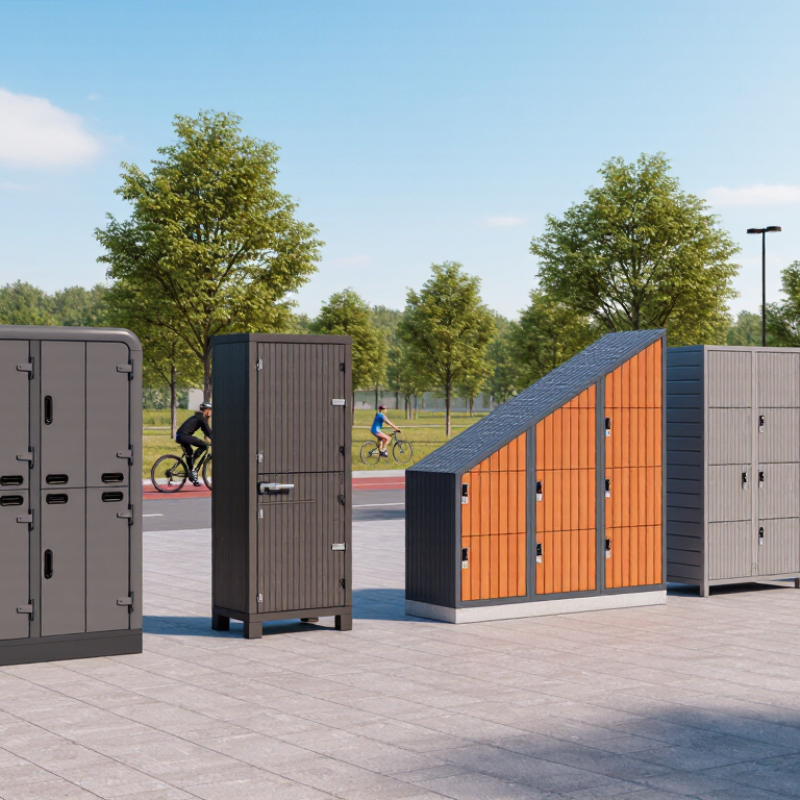
Top 10 Outdoor Bike Locker Manufacturers Worldwide

Definition and Scope of Outdoor Bike Lockers

Definition and Scope of Outdoor Bike Lockers

Outdoor bike lockers are secure, weather-resistant structures designed to store bicycles outside buildings. They usually protect bikes from rain, ultraviolet exposure, dust, theft, and accidental damage. Unlike open racks, lockers provide enclosed storage and often include controlled access, ventilation, drainage, and space for helmets or small equipment.

The term covers individual compartments, shared shelters, modular units, and larger bicycle storage rooms. Some models stand beside offices, train stations, schools, apartment buildings, or public paths. Their design depends on climate, available ground space, user volume, and maintenance capacity. A coastal location may require stronger corrosion resistance. A busy station may need faster access and better internal circulation. These details can change the meaning of “suitable” more than appearance does.

Tips:

Check the locker’s internal dimensions before purchasing. Measure bikes with baskets, child seats, or wide handlebars. Inspect hinges, locks, drainage points, and ventilation openings. Ask for material specifications and installation guidance from qualified suppliers. Real-world testing matters. A locker may look robust, yet become inconvenient when doors scrape the pavement or water collects inside. I have found that access planning is often underestimated. Users need enough room to enter, turn, and remove a bicycle without blocking nearby paths. This is not always obvious from a product image. A practical evaluation should include seasonal weather, cleaning routines, accessibility needs, and future bicycle demand.

Selection Criteria for Ranking Global Manufacturers

Top 10 Outdoor Bike Locker Manufacturers Worldwide

Selection Criteria for Ranking Global Manufacturers

Ranking outdoor bike locker manufacturers requires more than comparing prices. I examine product experience, engineering quality, and long-term field performance. A strong locker should resist rain, ultraviolet exposure, corrosion, and repeated daily use. Materials matter, but so do hinges, locking systems, drainage, and ventilation. I also review installation requirements, maintenance access, capacity, and compatibility with different bicycle sizes. Products tested near beaches or busy transit stations face harsher conditions than showroom samples. Real usage reveals weaknesses.

Reliable manufacturers provide clear technical drawings, load information, warranty terms, and replacement-part policies. Independent certifications can support safety claims, but certificates alone do not prove durability. I compare factory experience, production consistency, quality-control records, and delivery performance across regions. Customer feedback is useful when it includes photographs, service dates, and specific operating conditions. Some information remains difficult to verify. That matters.

Tips: Request a sample specification sheet before ranking any supplier. Check drainage details, lock performance, and internal dimensions. Ask how finishes are tested. Review repair response times, not only warranty length. A low initial price may hide difficult installation or expensive replacement parts. No ranking is perfect. Weather, usage, and local standards can change the result.

Top 10 Outdoor Bike Locker Manufacturers Worldwide

Top 10 Outdoor Bike Locker Manufacturers Worldwide

The top 10 outdoor bike locker manufacturers worldwide are not defined by appearance alone. Strong suppliers combine security, weather resistance, and practical daily access. Their lockers should protect bicycles through rain, dust, sunlight, and freezing conditions.

Manufacturers with proven expertise usually offer galvanized steel, marine-grade aluminum, or reinforced recycled materials. Powder-coated surfaces help reduce corrosion, but coating quality varies. Reliable producers publish material specifications and testing data. They also explain lock compatibility, ventilation performance, drainage design, and replacement-part availability. These details matter more than attractive product images.

Installation experience reveals another difference. Leading manufacturers provide clear anchoring plans, surface requirements, and service guidance for schools, workplaces, transit stations, and residential sites. Some designs support standard bicycles, cargo bikes, and electric bikes with wider frames. Safe cable routing and protected charging options may improve usability, but electrical features require qualified installation and local compliance checks. I would not trust a ranking based only on export volume. Customer feedback, warranty terms, production consistency, and independent testing deserve equal attention. No ranking is flawless. Regional climate and maintenance budgets can change the result. A manufacturer performing well in a dry city may struggle near salty coastal air. Buyers should request samples, inspect hinges and seals, and review long-term service records before making a final decision.

Top 10 Outdoor Bike Locker Manufacturers Worldwide

Rank Anonymous Manufacturer Profile Primary Locker Format Typical Capacity Common Structural Material Corrosion Protection Access Options Weather Resistance Installation Type Typical Use
1 Profile A Individual secure locker 1 bicycle Powder-coated galvanized steel Zinc coating and exterior powder coating Key, padlock hasp, or electronic lock High Surface-mounted Residential
2 Profile B Two-sided bike locker 2 bicycles Hot-dip galvanized steel Hot-dip galvanizing Keyed cylinder or user-supplied padlock High Bolted to concrete Transit stations
3 Profile C Modular compound 5–10 bicycles Galvanized steel panels Powder coating over galvanized substrate Mechanical key or keypad High Anchored assembly Apartment complexes
4 Profile D Walk-in bicycle shelter 10–20 bicycles Steel frame with metal cladding Galvanized frame and coated panels Keypad, RFID, or access-control system High Concrete foundation Workplaces
5 Profile E Single-user vertical locker 1 bicycle Aluminum or galvanized steel Anodized finish or powder coating Key lock or digital keypad Medium–High Wall or floor anchored Schools
6 Profile F Covered communal locker 4–8 bicycles Galvanized steel and polycarbonate Galvanizing with UV-resistant panels Padlock hasp or shared key system Medium–High Surface-mounted Public parks
7 Profile G Heavy-duty secure enclosure 2–4 bicycles Welded galvanized steel Heavy-gauge steel with powder coating High-security cylinder or electronic lock Very high Anchored to slab Public facilities
8 Profile H Compact outdoor locker 1 bicycle Recycled plastic or composite panels UV-stabilized, moisture-resistant panels Padlock hasp or keyed lock Medium Ground anchored Private homes
9 Profile I Premium architectural enclosure 2–6 bicycles Stainless steel or architectural aluminum Stainless finish or marine-grade coating Electronic, RFID, or mobile access Very high Permanent foundation Commercial sites
10 Profile J Expandable bicycle storage unit 10+ bicycles Galvanized steel frame and mesh panels Galvanizing with optional powder coating Keypad, card reader, or managed access High Modular foundation system Residential developments

Note: Company and brand identifiers are intentionally omitted. Capacity, materials, access systems, and installation methods are representative product-category specifications commonly used for outdoor bicycle lockers; exact specifications vary by model and project requirements.

Product Designs, Materials, and Security Features

Top 10 Outdoor Bike Locker Manufacturers Worldwide: Product Designs, Materials, and Security Features

Outdoor bike lockers are becoming practical infrastructure as cities expand cycling networks. UN-Habitat’s World Cities Report 2022 states that 56% of the global population already lives in urban areas. This density increases pressure on compact, secure bicycle storage. The U.S. Census Bureau’s 2022 American Community Survey recorded bicycle commuting at about 0.5% of U.S. workers, showing room for substantial growth. Manufacturers now offer individual lockers, two-tier systems, and modular units for stations, campuses, and apartments.

Material selection affects lifespan. Galvanized steel provides impact resistance, while aluminum reduces installation weight. Recycled polymer panels resist moisture and require less repainting. However, “maintenance-free” is rarely accurate. Hinges, drainage channels, and locking cylinders still need inspection. ISO 12944 corrosion categories help specifiers compare protective coatings, especially near coastlines or roads treated with salt. Ventilation openings should prevent condensation without exposing the bicycle to rain.

Security begins with structure, not the lock alone. Strong lockers use concealed hinges, reinforced doors, anti-pry seams, and tamper-resistant fasteners. Certified disc or shackle locks can support controlled access, while keypad, smart-card, and mobile systems improve auditability. The 2023 U.S. Department of Transportation Safe Streets report emphasizes secure, connected active-transportation facilities, but access technology can fail during power or network outages. A mechanical override remains sensible. Small detail. Yet often missed. Periodic checks should test anchoring, drainage, lighting, and emergency access before the locker becomes a neglected metal box.

Global Market Coverage and Buyer Considerations

Top 10 Outdoor Bike Locker Manufacturers Worldwide

Global coverage matters when comparing the top ten outdoor bike locker manufacturers. A supplier may perform well locally but struggle with overseas delivery. Buyers should check production capacity, export experience, installation support, and replacement-part availability. These details affect projects across campuses, transport hubs, housing developments, and commercial sites.

Weather performance deserves close attention. Steel lockers need proven corrosion protection, sealed joints, and effective drainage. In coastal areas, salt exposure can damage weak finishes quickly. Cold regions require locks that resist freezing. Hot climates may need ventilation to reduce internal moisture. I have found that product brochures often show ideal conditions, not difficult sites. That gap deserves questioning.

Security is only one buying factor. Review anchoring methods, lock resistance, visibility, lighting, and emergency access procedures. Check whether the design supports different bicycle sizes, including models with wide tires. Measure the full footprint, including doors and maintenance clearance. A compact unit may save space but create daily congestion.

Buyers should request test reports, warranty terms, installation drawings, and references from comparable climates. Delivery time also matters. A low initial price can become expensive when parts, customs handling, or local labor are ignored. My own early comparisons focused too heavily on unit cost. That was a mistake. Reliable procurement requires technical evidence, clear service commitments, and honest evaluation of site conditions.

FAQS

What is an outdoor bike locker?

It is an enclosed, weather-resistant structure for storing bicycles outside buildings. It helps reduce exposure to rain, sunlight, dust, theft, and accidental damage. Some units include ventilation, drainage, controlled access, and helmet space.

How is a locker different from an open bike rack?

An open rack leaves bicycles exposed. A locker provides enclosed storage and usually offers stronger protection from weather and unauthorized access. It also needs more space and regular inspection.

Where are outdoor bike lockers commonly installed?

Common locations include offices, train stations, schools, apartment buildings, and public paths. A busy station may need quicker entry and wider internal circulation. A quiet residential site may need simpler access.

What should buyers measure before choosing a locker?

Measure bicycles with baskets, child seats, wide handlebars, or large frames. Check the internal length, width, and height carefully. A bicycle may fit on paper but become difficult to remove.

Which materials work well in different climates?

Galvanized steel, marine-grade aluminum, and reinforced recycled materials can provide useful durability. Coastal locations need stronger corrosion resistance because salty air attacks exposed surfaces. Coating quality still varies.

What construction details deserve close inspection?

Inspect hinges, seals, locks, drainage points, ventilation openings, and anchoring locations. Doors should not scrape the pavement. Water should not collect inside after rain.

How should manufacturers be compared?

Compare engineering quality, field performance, technical drawings, warranty terms, and replacement-part policies. Review installation guidance and repair response times. A low price may hide difficult maintenance.

Do certifications prove that a locker will last?

Certifications can support safety and quality claims, but they do not prove long-term durability alone. Real photographs, service records, and local weather results provide stronger context. Some information remains difficult to verify.

What access and maintenance issues are often overlooked?

Users need room to enter, turn, and remove bicycles without blocking nearby paths. Maintenance plans should cover cleaning, drainage checks, lock repairs, and surface inspection. Access planning is often underestimated.

Is any global ranking of manufacturers completely reliable?

No ranking is flawless. Climate, usage levels, local standards, and maintenance budgets can change the result. A unit that performs well in a dry city may struggle near salty coastal air.

Conclusion

This article presents a practical overview of the Outdoor Bike Locker industry, beginning with the definition, purpose, and common applications of outdoor bicycle storage systems. It explains how manufacturers are evaluated, including product quality, weather resistance, security performance, design innovation, production capacity, sustainability, customer support, and international market reach. Based on these criteria, the article introduces ten leading manufacturers worldwide without focusing on brand promotion, helping readers understand the diversity of solutions available for public spaces, workplaces, residential communities, schools, and transportation hubs.

The comparison also examines product designs, construction materials, ventilation, access control, modular features, and protection against theft and harsh weather. In addition, it discusses global market coverage and important buyer considerations, such as installation conditions, local climate, user capacity, maintenance requirements, customization options, budget, and long-term durability. The goal is to provide a balanced framework for organizations and individuals selecting a secure, practical, and sustainable Outdoor Bike Locker solution.


Aria

Aria

Aria is a dedicated marketing professional with a deep passion for innovative strategies and a keen understanding of our company's product offerings. With a wealth of experience in the industry, Aria excels at crafting engaging content that highlights the unique features and benefits of our......