 KAVASS
Commercial & Industrial Safety Dynamics in the United States
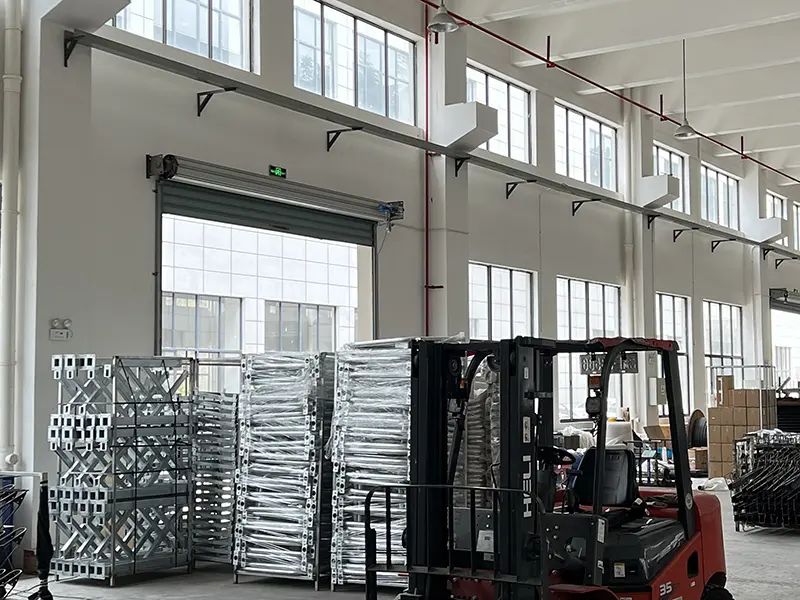
The industrial landscape of the United States has undergone a tectonic shift, driven by the massive expansion of e-commerce, automated logistics distribution networks, and advanced manufacturing plants. Millions of square feet of warehousing facilities across states like Texas, California, Ohio, and Pennsylvania demand sophisticated safety solutions to manage human-machine interaction risks. With the adoption of Automated Guided Vehicles (AGVs) and heavy-duty forklifts, physical protection systems are no longer secondary options—they are critical operational baselines.
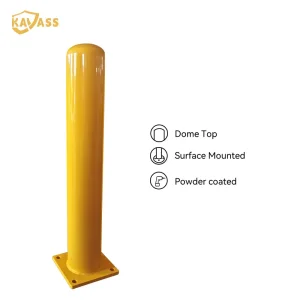
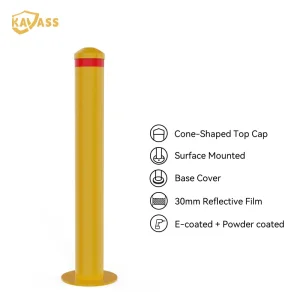
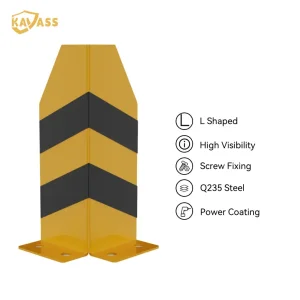
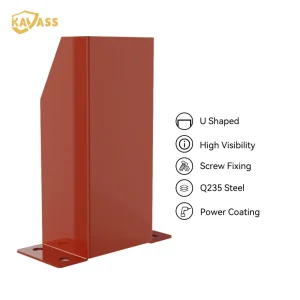
In the United States, industrial safety is strictly governed by federal regulations and consensus-based industry standards. Companies face significant operational risk if they fail to provide appropriate safeguarding mechanisms. The interface between forklifts and structural columns, material racking, and pedestrian zones represents one of the highest risk areas in any supply chain facility. High-durability safety bollards, L-type and U-type rack protectors, and barrier systems prevent millions of dollars in structural damage and protect the lives of personnel every single day.
Federal Compliance and Safety Standards
Operating a facility in the United States requires compliance with the Occupational Safety and Health Administration (OSHA) regulations. Specifically, OSHA 1910.28 establishes the duty to have fall protection and falling object protection, while OSHA 1910.176 enforces safe material storage guidelines, mandating that racks must be safeguarded from mechanical damage. Furthermore, standard groups like ANSI (American National Standards Institute) and RMI (Rack Manufacturers Institute) specify the engineering and installation requirements for rack upright protectors, certifying that they can withstand repeated low-to-medium speed impacts without structural compromise.