Explore our top-tier manufacturing lines featuring heavy-duty carbon steel, 304/316 grade stainless steel, and weather-protected access control systems.
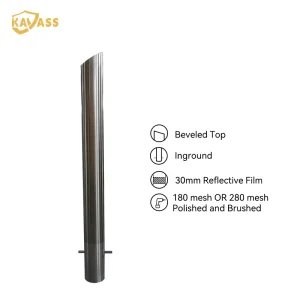
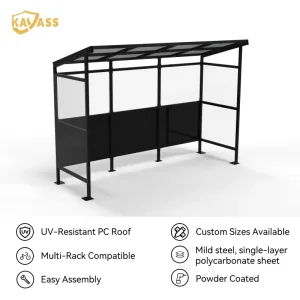
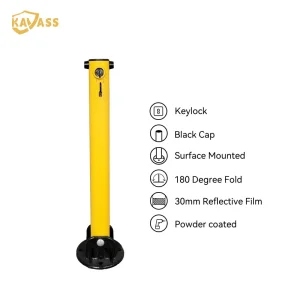
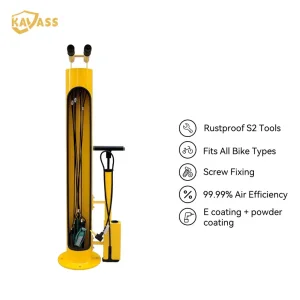
Modern physical threat landscapes demand dynamic perimeter security solutions. Historically, fixed bollards were the industry standard for demarcation, but their static nature poses immediate challenges for utility access, emergency dispatch routes, and flexible urban planning. The global shift toward urban pedestrianization has accelerated the demand for bollards that go up and down—modular, retractable security barriers capable of balancing impact resistance with instantaneous physical clearance.
From a security architectural perspective, retractable bollards represent a hybrid solution. They offer high-load structural security when raised and lay flush with the surface when retracted, maintaining an unobstructed path for emergency, service, or VIP transit. Engineering these dynamic assemblies requires calculating precise kinetic energy transfer ($KE = \frac{1}{2}mv^2$) to ensure the structural cylinder, foundation sleeve, and internal mechanism can absorb and dissipate high-velocity impacts.
Key Engineering Requirement: Rising bollards must perform reliably under extreme weather conditions, including submersion, freezing temperatures, and heavy silt accumulation, while maintaining structural alignment.
| Actuation Type | Operational Mechanism | Ideal Application | Impact Resistance Profile | Maintenance Cycle |
|---|---|---|---|---|
| Hydraulic (Electro-Hydraulic) | Integrated hydraulic pump and cylinder unit inside the bollard enclosure or external cabinet. | High-security checkpoints, government installations, toll booths. | Extreme (Tested to crash-rated standards: ASTM F2656, PAS 68). | Bi-annual (hydraulic fluid and seal inspection). |
| Pneumatic | Compressed air lines powered by an external compressor unit. | Cold climates with high cycling requirements; multi-bollard arrays. | High to Medium (Dependent on cylinder wall thickness). | Quarterly (air line purging, water traps, seals). |
| Electromechanical | Electric motor with a mechanical spindle or ball screw system. | Commercial parking, retail entrances, access-controlled pedestrian zones. | Medium to High (Up to crash-rated standards). | Annual (greasing and gear check; no oil hazard). |
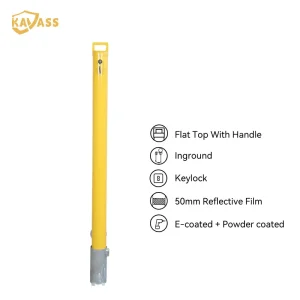
| Manual Telescopic | Internal gas spring assistance with manual keylock deployment. | Storefront protection, driveways, intermittent access lanes. | Medium (Typically structural mild or stainless steel). | Minimal (Lock cylinder lubrication). |
Selecting the correct material is critical for ensuring both corrosion resistance and structural integrity in hostile environments. KAVASS utilizes marine-grade 304 and 316 stainless steel alongside structural carbon steel finished with high-performance hot-dip galvanization (ISO 1461 standards). 316 stainless steel, with the addition of molybdenum, provides superior resistance to chlorides and de-icing salts, making it the industry standard for marine environments and northern metropolitan transit zones.
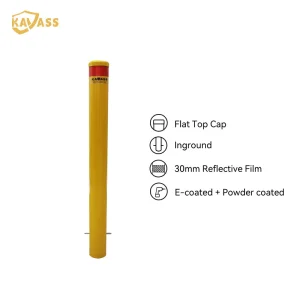
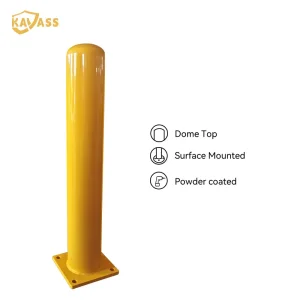
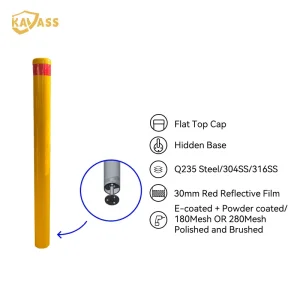
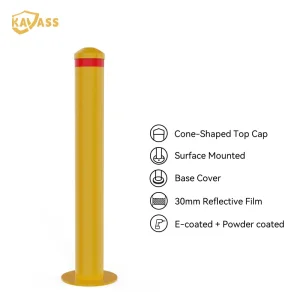
For high-security industrial areas, carbon steel bollards feature heavy 6mm to 16mm wall thicknesses, engineered to withstand substantial shear forces. These are often treated with a dual-stage powder coat over a zinc-rich primer to prevent sub-film corrosion. In traffic-heavy zones where visibility is crucial, these units incorporate high-visibility reflective bands, LED top rings, and custom flat, domed, or beveled caps designed to shed water and debris efficiently.
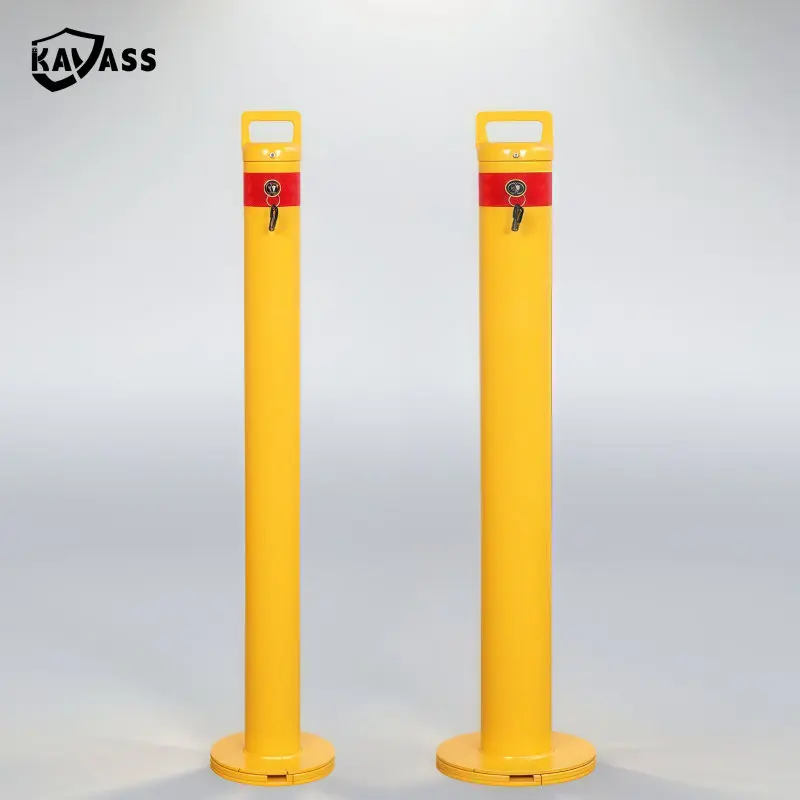
Fabricated using premium 304/316 stainless steel and heavy carbon steel to deliver superior wear resistance and structural integrity.
Features optimized internal gas-spring, hydraulic, or electromechanical systems that deliver reliable, smooth operation.
Engineered to absorb severe dynamic impacts, protecting pedestrian areas and high-value buildings.
Automatic rising bollards function as critical nodes within integrated security systems. Modern security architectures require these barriers to interface seamlessly with building management platforms and primary access control systems. This includes card readers, biometric scanners, automated license plate recognition (ALPR) cameras, and RFID long-range transponders. A central PLC (Programmable Logic Controller) manages operational queues and coordinates safety protocols, preventing the bollard from raising when a vehicle is positioned overhead.
Safety is managed through redundant sensor loops. Dual induction loops cut into the roadway detect the metallic mass of a vehicle, holding the bollard in the down position until the vehicle completely clears the zone. Safety photocells and pressure-sensitive valves in hydraulic systems provide secondary lines of protection. Additionally, emergency override inputs (such as fire alarm relays or remote manual switches) ensure that bollards can either drop instantly during power loss or fail-secure in high-threat scenarios, depending on the site requirements.
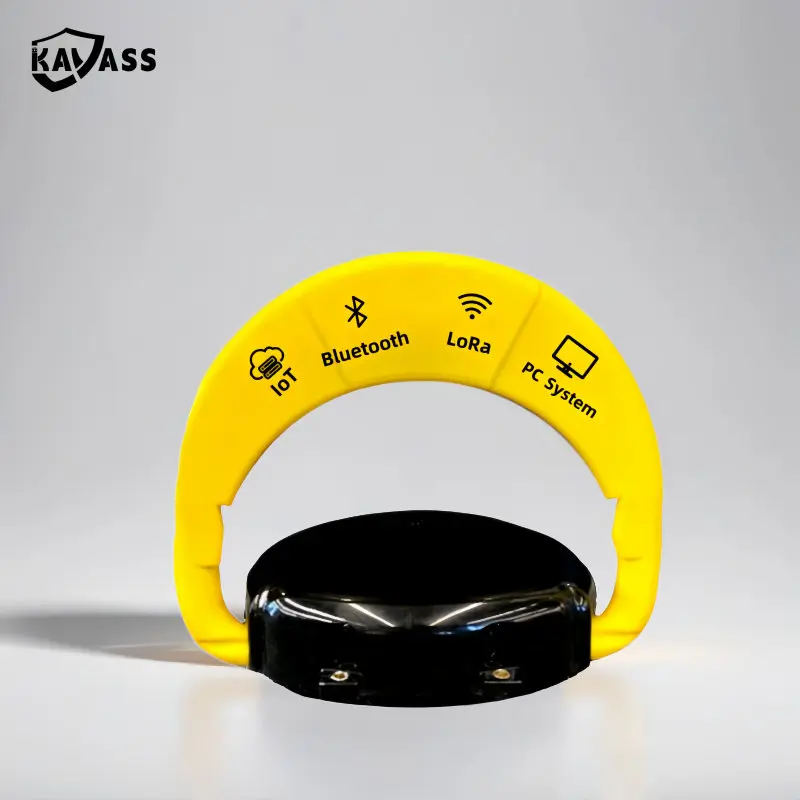
How KAVASS bridges advanced automation, global delivery requirements, and cost-efficiency to support critical infrastructure projects.
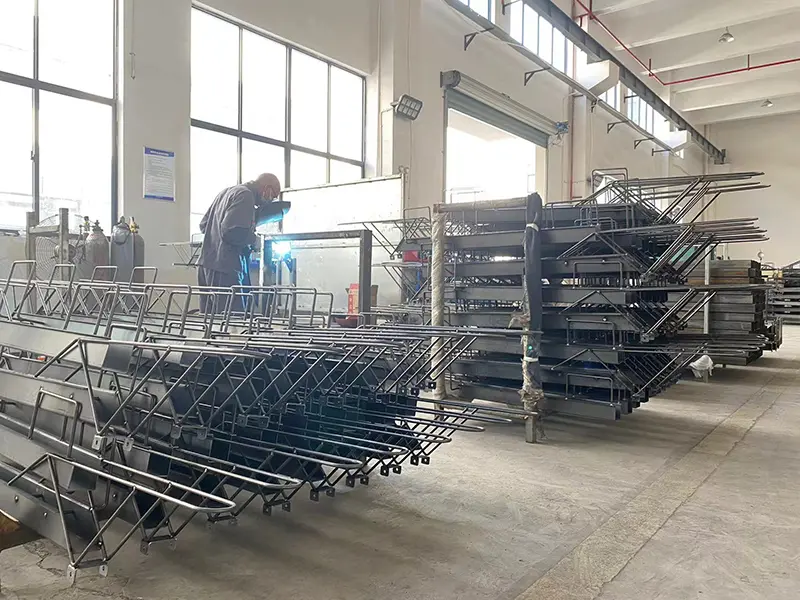
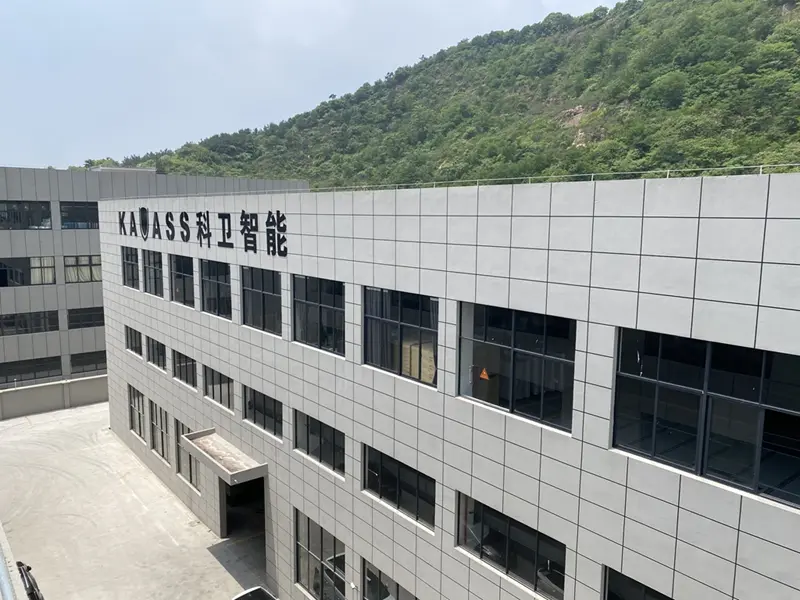
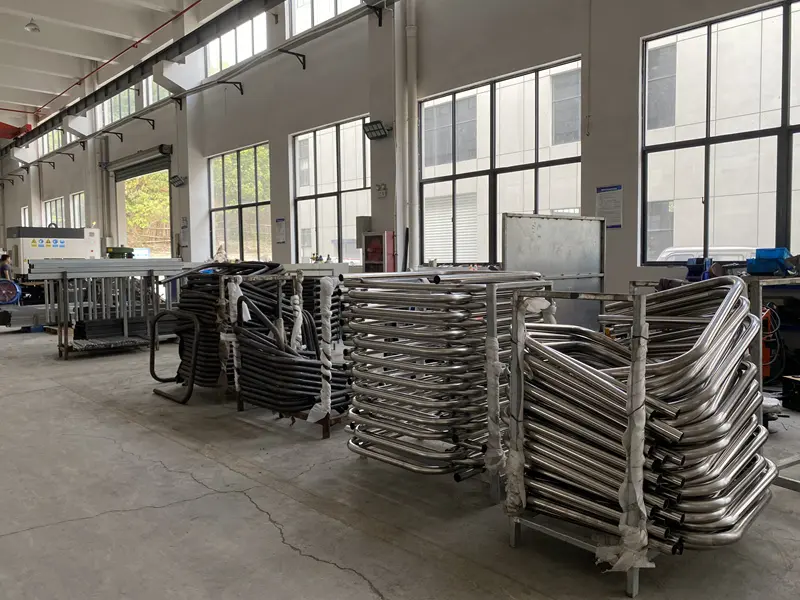
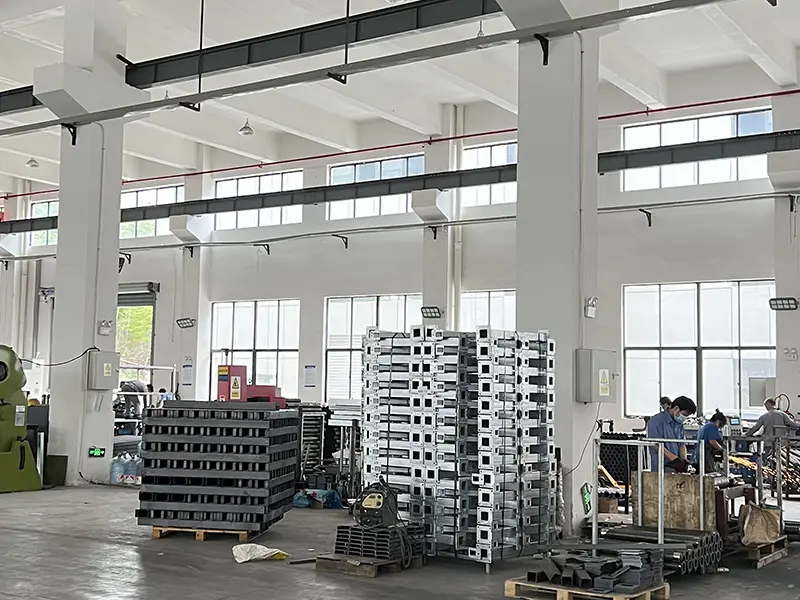
Operating out of twin production facilities—the Deqing Factory and the Zhuji Factory—KAVASS leverages China's advanced Industry 4.0 infrastructure to manufacture high-tolerance security equipment. Our facilities integrate automated laser tube cutting, advanced robotic welding stations, and specialized CNC machining centers. This level of automation ensures consistent weld penetration, precise geometric tolerances, and surface finishes that meet demanding international architectural specifications.
Our localized supply chain integration allows us to respond rapidly to project requirements. For example, standard high-visibility fold-down bollards can be manufactured and shipped on a 3-day turnaround. KAVASS controls the entire production cycle, from raw steel procurement to final performance testing. This vertical integration helps insulate project schedules from international logistics disruptions while ensuring all products meet strict global performance standards.
Focused on heavy structural steel processing, automated coating, and high-volume assembly lines for fixed and telescopic security barriers.
Specializes in precision CNC machining, hydraulic power unit testing, and assembling integrated electromechanical drive systems.
Every batch undergoes strict quality control, including cyclical wear testing and load-bearing verification to ensure reliable long-term performance.
Different projects demand tailored security strategies. KAVASS solutions are deployed globally across diverse architectural landscapes.
Protects high-foot-traffic plazas and retail corridors from vehicle intrusion during public events, while retracting flush to the pavement to allow scheduled service vehicle access.
Protects sensitive loading bays, warehouse racking systems, and electrical substations from accidental forklift or delivery truck impacts, minimizing facility downtime.
Deploys heavy-duty, crash-rated automatic rising barriers integrated with access control to protect critical government, military, and energy storage sites from potential hostile vehicle threats.
Technical answers to key engineering, integration, and procurement questions for architects and security planners.
Hydraulic rising bollards utilize fluid pressure to raise and lower, making them ideal for heavy-duty, high-security projects that require high duty cycles and crash-resistant ratings. Pneumatic systems use compressed air, which is well-suited for high-speed operation and cold-weather locations, though they require external compressor rooms. Electromechanical bollards run on direct electric motors and mechanical drive screws, which avoids oil leak risks and simplifies maintenance, making them popular for commercial and retail properties.
Adequate drainage is critical for all in-ground automatic installations. Retractable bollard foundations must be installed with a sub-base layer of washed gravel to allow water to drain naturally. In areas with high water tables or heavy rain, the outer casing should connect to the site's main storm drain or a dedicated sump pump system to prevent water from collecting inside the tube and damaging the mechanical components.
Most automatic systems feature emergency lowering valves or manual overrides. Hydraulic systems typically include a manual release valve within the lockable cabinet, allowing security staff to lower the bollard manually. Many systems can also be configured to lower automatically during a power failure (fail-safe) or remain locked in the raised position (fail-secure), depending on local emergency access protocols.
Yes, KAVASS provides comprehensive OEM and ODM support. We can customize tube diameters, wall thicknesses, travel heights, and finish treatments. Our engineering team can also incorporate custom laser-etched branding, logos, LED light configurations, and specific colors to match municipal or corporate design guidelines.
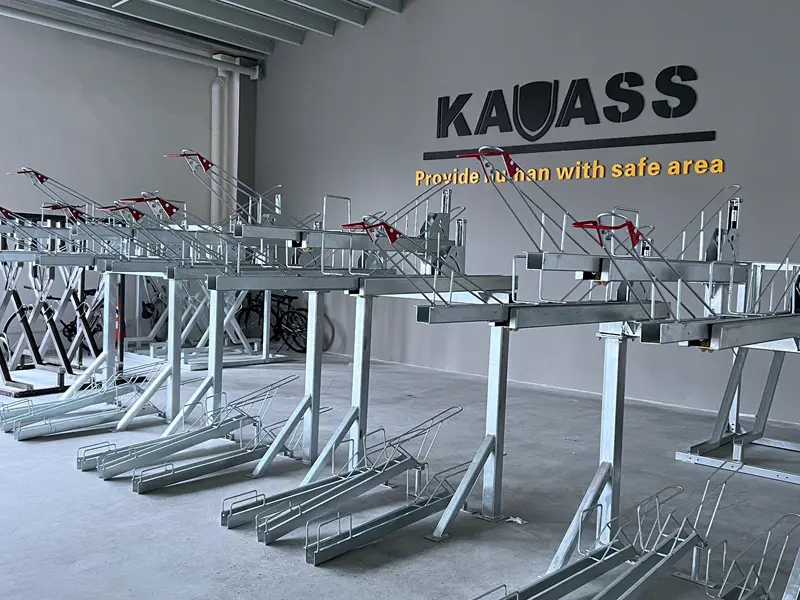
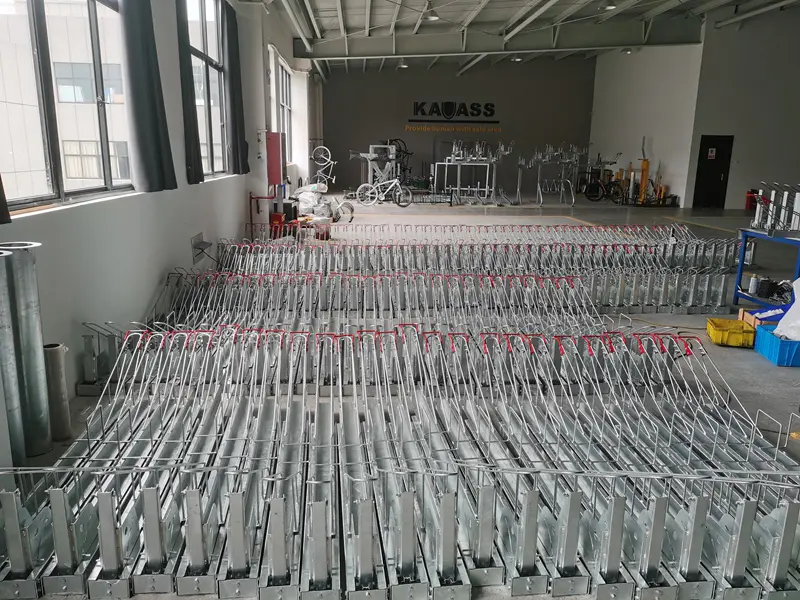
Tour our advanced manufacturing workshops, testing areas, and logistics centers.
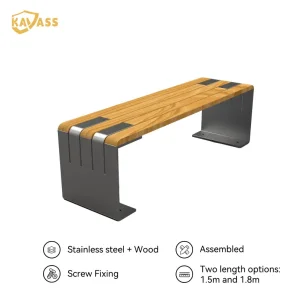
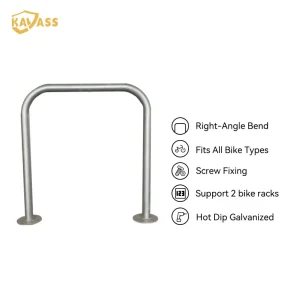
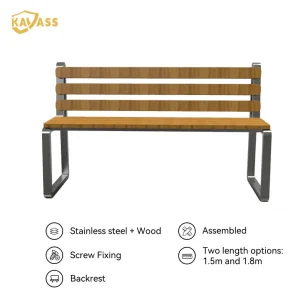
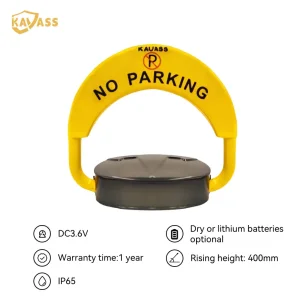
Complementary systems designed to build safe, organized, and secure public spaces.
 KAVASS